




What's Happening?
Raleigh, North Carolina, has experienced a 15% decrease in inflation-adjusted rents between 2022 and 2025, following comprehensive land-use policy reforms enacted in 2021 and 2022. These reforms were a direct response to a 38% rent increase from 2017
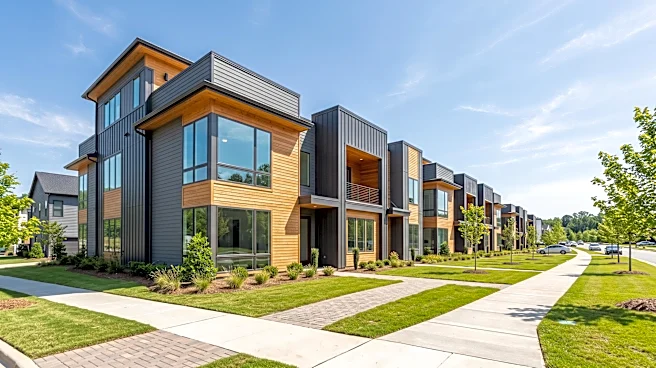
to 2022, driven by a 10% population surge. The city's planning and development director, Patrick Young, highlighted that restrictive zoning regulations were the most controllable factor in housing costs. The policy changes included overhauling zoning to focus on form rather than density, enabling the construction of townhomes, plexes, and tiny homes, allowing more apartments near transit, and eliminating citywide parking minimums. As a result, housing production jumped 74% from an average of 3,301 units annually (2017-2020) to 5,731 units annually (2021-2024). This increase significantly outpaced the rest of North Carolina and the U.S. in housing stock growth. The city also passed an $80 million housing bond in 2020 to fund affordable housing initiatives.
Why It's Important?
Raleigh's success demonstrates a viable model for other U.S. cities grappling with housing affordability crises, particularly those experiencing rapid population and economic growth. By proactively addressing restrictive zoning and parking mandates, Raleigh has shown that increasing housing supply can effectively mitigate rising rental costs, even amidst high demand. The focus on 'missing middle' housing (townhomes, duplexes, etc.) and transit-oriented development provides diverse housing options and reduces reliance on single-family homes, which are often less affordable. The elimination of parking minimums has also reduced construction costs, making housing more financially feasible for developers and ultimately more affordable for residents. This approach directly counters the common narrative that population growth inevitably leads to unaffordable housing, offering a policy-driven solution that benefits residents across income levels, especially lower-income renters who often bear the brunt of housing shortages.
What's Next?
Raleigh is considering further streamlining its land-use and permitting processes to encourage more diverse housing types. This includes making it easier and less costly to build small subdivisions and creating a consolidated land development process for large projects. These next steps aim to maximize the practical use of available land and reduce administrative burdens, further accelerating housing production. Other U.S. cities and states may look to Raleigh's experience as a blueprint for their own housing policy reforms. North Carolina has already passed statewide parking reform, removing minimum off-street parking requirements for most uses, indicating a broader trend towards such deregulation. The continued monitoring of Raleigh's housing market will provide valuable data on the long-term impacts of these policies on affordability, urban development, and resident well-being.
Beyond the Headlines
The reforms in Raleigh highlight a significant shift in urban planning philosophy, moving away from traditional, often restrictive, zoning practices towards more flexible, supply-oriented approaches. This shift has broader implications for urban design, environmental sustainability, and social equity. By allowing more diverse housing types and reducing car-centric mandates like parking minimums, cities can foster more walkable, transit-friendly communities, potentially reducing carbon emissions and promoting healthier lifestyles. The emphasis on affordable housing units, partly funded by housing bonds, also addresses critical social equity concerns, ensuring that essential workers and lower-income residents can remain in their communities despite economic growth. This model challenges the notion that urban development must inevitably lead to displacement and gentrification, suggesting that thoughtful policy can enable inclusive growth.