





What's Happening?
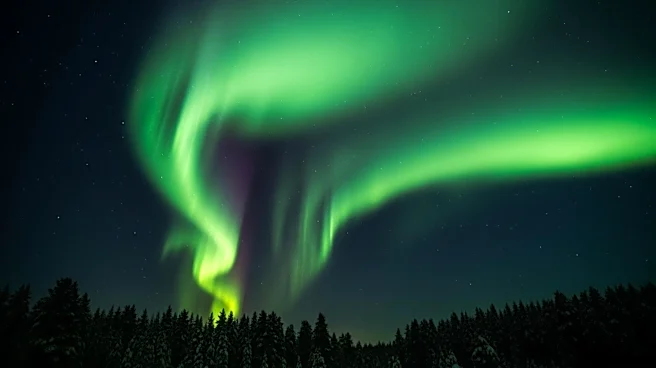
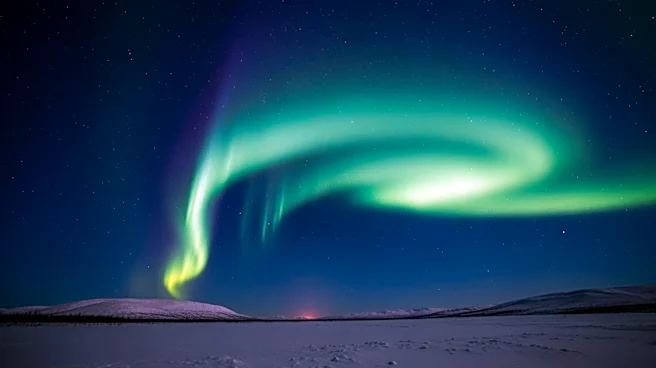
The National Oceanic and Atmospheric Administration (NOAA) has forecasted a potential display of the northern lights, or aurora borealis, due to heightened geomagnetic activity. This activity is expected to be triggered by a high-speed solar wind from
a coronal hole, which is anticipated to sweep past Earth on May 7. The resulting geomagnetic storm could produce visible auroras across northern latitudes, including parts of Alaska, Canada, and potentially the northern United States. This marks the third occurrence of such a light show within the week, offering a rare opportunity for observers in these regions to witness the natural phenomenon.
Why It's Important?
The occurrence of the northern lights is a significant event for both scientific observation and public interest. Geomagnetic storms, caused by solar particles interacting with Earth's atmosphere, provide valuable data for scientists studying space weather and its effects on Earth's magnetic field. For the public, the aurora borealis is a captivating natural spectacle that draws attention to the dynamic interactions between the sun and our planet. The potential visibility of the auroras in areas not typically exposed to such displays could increase public engagement and awareness of space weather phenomena.
What's Next?
Observers in regions with optimal viewing conditions, such as northern Alaska and parts of Canada, are advised to prepare for the best viewing opportunities during the late hours of May 7 into the early hours of May 8. Those in more southern areas, like parts of Michigan and New York, may also have a chance to see the auroras, provided there is clear weather and minimal light pollution. NOAA's Space Weather Prediction Center will continue to monitor solar activity and provide updates on the geomagnetic storm's progression.