



What's Happening?
A powerful winter storm has swept across Israel, bringing fierce winds, heavy rain, and snowfall in the northern regions. The storm has caused widespread damage, including the collapse of a wall at a historic winery in Rishon Lezion and shattered windows
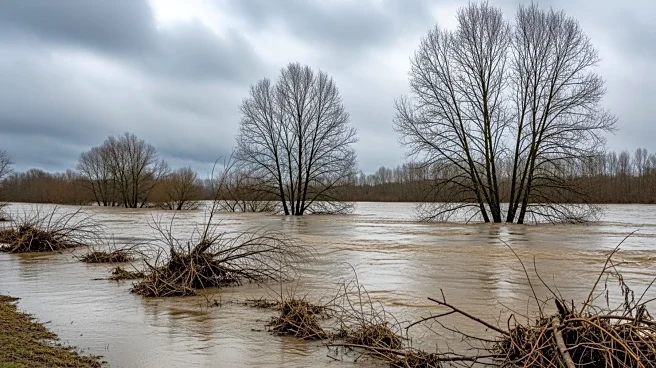
in Nahariya. Authorities have issued warnings about potential flooding and hazardous travel conditions, particularly in the Judean Desert and Dead Sea region. Wind gusts reached up to 103 kilometers per hour along the coast, and significant rainfall was recorded in various areas, including Jerusalem and the Golan Heights. Emergency services have advised the public to avoid nonessential travel and to follow official instructions as conditions evolve.
Why It's Important?
The storm's impact highlights the vulnerability of infrastructure and communities to extreme weather events, which are becoming more frequent and severe due to climate change. The damage to property and disruption of daily life underscore the need for improved emergency preparedness and infrastructure resilience. The economic implications are significant, as repair and recovery efforts will require substantial resources. Additionally, the storm serves as a reminder of the importance of climate adaptation strategies to mitigate the effects of such natural disasters on society.
What's Next?
As the storm continues, authorities are monitoring the situation closely and preparing for potential further damage. The weather is expected to remain stormy, with heavy rain and thunderstorms persisting. Emergency services are on high alert, and additional resources may be deployed to assist affected areas. In the longer term, there may be discussions on enhancing infrastructure resilience and emergency response capabilities to better handle future extreme weather events.