





What's Happening?
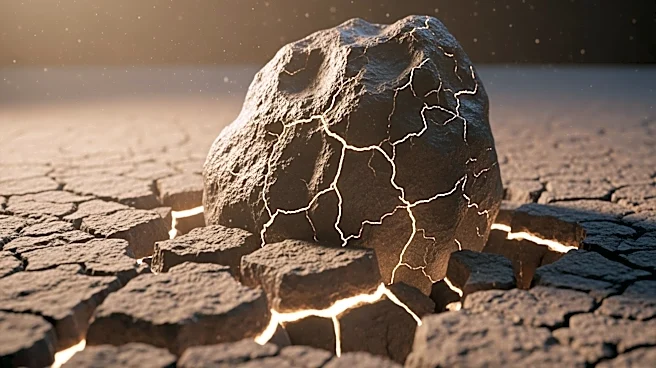
A new study suggests that the asteroid impact that led to the extinction of the dinosaurs also created a vast underground habitat capable of supporting microbial life for millions of years. The Chicxulub impact, which occurred 66 million years ago, generated
a hydrothermal system beneath the crater that persisted for at least 8 million years. This environment, characterized by hot, water-filled pores and cracks, provided favorable conditions for microbial life. The findings are based on advanced geological simulations and evidence from rock samples collected from the crater.
Why It's Important?
The discovery of a long-lived hydrothermal system beneath the Chicxulub crater has significant implications for understanding the resilience and adaptability of life on Earth. It suggests that life can thrive in extreme environments, potentially offering insights into the origins of life on our planet. The study also has implications for the search for life on other planets, such as Mars, where similar impact-generated systems may have existed. This research highlights the potential for life to persist in seemingly inhospitable conditions, expanding our understanding of life's possibilities in the universe.
Beyond the Headlines
The study raises intriguing questions about the role of catastrophic events in shaping the evolution of life on Earth. It suggests that while such events can lead to mass extinctions, they may also create new opportunities for life to emerge and evolve. This dual nature of impact events could be a crucial factor in the history of life on Earth and other planets. The findings also underscore the importance of interdisciplinary research, combining geology, biology, and planetary science to explore the complex interactions between life and the environment.