
What's Happening?
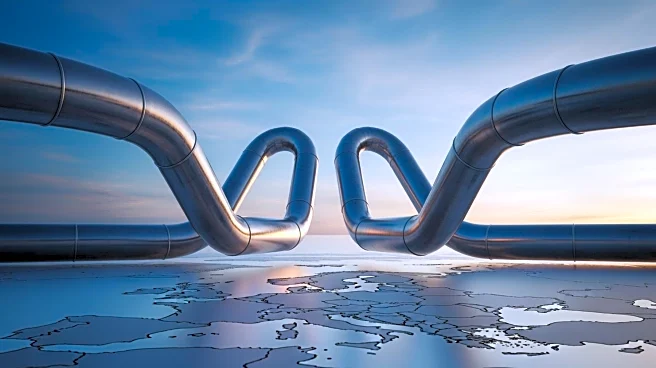
As Europe plans to ban Russian gas imports by 2027, discussions about a potential peace deal between Russia and Ukraine have sparked speculation about the future of Europe's energy infrastructure. The
Nord Stream pipelines, damaged during the conflict, remain a focal point of these discussions. While talks for a ceasefire are slow, the possibility of re-establishing energy links with Russia raises questions about Europe's energy strategy. The European Council has already agreed to phase out Russian gas imports, but the potential for a peace deal could alter these plans.
Why It's Important?
The outcome of peace negotiations could significantly impact Europe's energy landscape. A return to Russian gas supplies might alleviate high energy costs in countries like Germany but could also reignite political and ethical debates about reliance on Russian energy. The U.S. and other stakeholders may resist such a move, preferring to increase their market share of liquefied natural gas sales to Europe. The situation underscores the complex interplay between geopolitical tensions and energy security, with potential economic and political ramifications for the region.
What's Next?
Europe faces a critical decision on whether to reintegrate Russian gas supplies if a peace deal is reached. The European Union's legislative framework currently aims to reduce dependency on Russian energy, but exceptions exist for emergencies. The future of the Nord Stream pipelines remains uncertain, with preservation work permitted but not yet commenced. The broader geopolitical landscape, including potential changes in Russian leadership, could influence Europe's energy policies and its relationship with Russia.
Beyond the Headlines
The ethical implications of resuming energy ties with Russia are significant, given the ongoing conflict and its humanitarian impact. Europe's energy independence strategy is rooted in reducing reliance on a single supplier, promoting diversification and sustainability. The potential reintegration of Russian gas could challenge these goals, highlighting the tension between economic pragmatism and political principles. The situation also reflects broader global energy dynamics, as countries navigate the transition to renewable sources while managing immediate energy needs.