




What's Happening?
At the opening of the 31st UN Climate Change Conference (COP31) in Antalya, Türkiye, a strong call has been made to reject marine geoengineering and protect oceans. The Home Alliance, a coalition of civil society, Indigenous Peoples, and grassroots organizations,
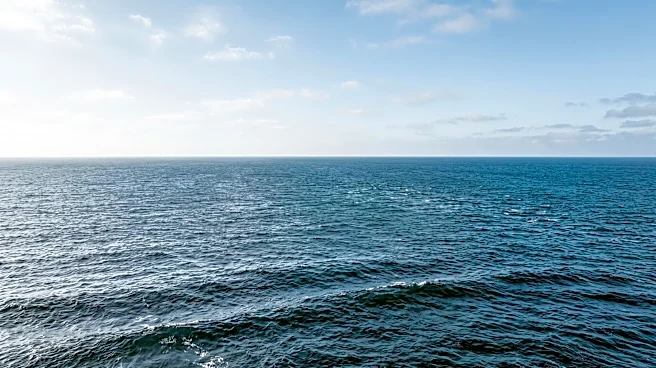
released a statement emphasizing that the vital role of oceans in regulating the climate system should lead to their stewardship and protection, not manipulation. The statement highlights concerns that as the climate crisis escalates, the ocean is being viewed as a 'limitless dumping ground' for climate pollution, with highly speculative and risky marine carbon dioxide removal (mCDR) projects being promoted under vague terms like 'Ocean Based Climate Solutions.' These groups argue that such attempts to manipulate the ocean present incalculable uncertainty and risk, threatening both a critical carbon sink and the origin of life on Earth.
Why It's Important?
This collective call at COP31 underscores a significant global concern regarding the direction of climate change mitigation efforts. The rejection of marine geoengineering by a broad coalition of stakeholders signals a growing distrust in technological 'fixes' that do not address the root causes of climate change. If these calls gain traction, it could lead to stronger international moratoriums or regulations against marine geoengineering, impacting research, development, and investment in such technologies. The emphasis on protecting oceans rather than manipulating them also highlights a fundamental philosophical divide in climate action: whether to focus on preserving natural systems or intervening with large-scale technological solutions. This debate has profound implications for global environmental policy and the future of ocean ecosystems.
What's Next?
The Home Alliance is urging governments and COP31 Presidencies to uphold the long-standing de facto moratorium on all climate geoengineering approaches, including marine carbon dioxide removals, under the Convention on Biological Diversity. They are also advocating for the avoidance of vague terminology in COP31 decisions to prevent loopholes for geoengineering proponents. Furthermore, the alliance calls for the exclusion of marine carbon dioxide removal credits from Article 6 mechanisms and Nationally Determined Contributions accounting, instead pushing for grant-based ocean climate finance. The immediate next steps involve continued advocacy and negotiation within COP31 to integrate these demands into official climate policy, which could significantly shape the future of marine conservation and climate action.
Beyond the Headlines
The debate surrounding marine geoengineering touches upon deeper ethical and social justice issues. The statement points out that these misguided attempts to manipulate the ocean risk 'entrenching extraction, dumping and appropriation,' further exposing frontline populations who have contributed least to the climate crisis to its worst impacts. This highlights a concern that technological solutions might disproportionately benefit wealthier nations or corporations while externalizing risks onto vulnerable communities and ecosystems. The assertion that 'The Ocean is not a testing ground for profit-driven experiments and carbon market gambling' reflects a broader critique of market-based approaches to environmental problems and a call for a more holistic, equitable, and nature-centric approach to climate solutions.