





What's Happening?
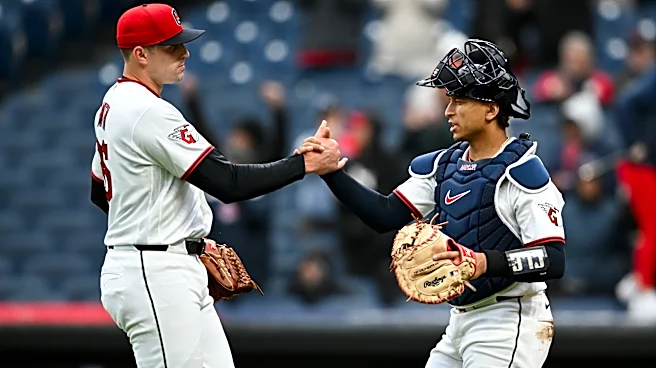
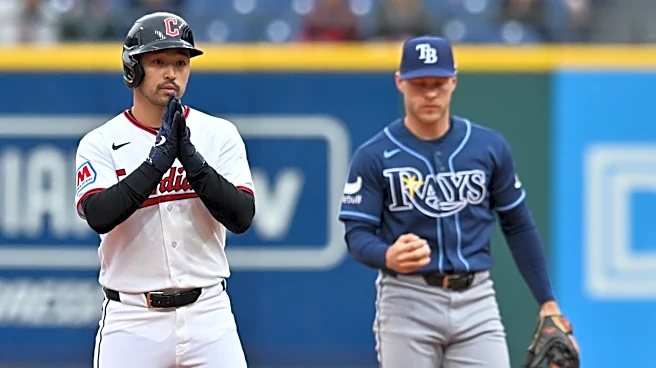
Max Quinn, a fan of the Cleveland Guardians, became the center of a viral controversy after he was seen snatching a home run baseball from an 11-year-old girl named Evelyn during a game against the Tampa Bay Rays at Progressive Field. The incident, which
occurred on April 27, was captured on the Rays' broadcast and quickly spread online, leading to widespread criticism of Quinn's actions. In response to the backlash, Quinn appeared in an interview on Fox 8, where he expressed regret for his actions, describing them as a 'heat-of-the-moment' decision. He admitted to not realizing the ball was being pursued by a young girl and acknowledged the severity of his mistake. Despite the initial incident, Quinn later returned the ball to Evelyn, who, along with her mother, publicly forgave him. The incident also affected Quinn's business, Uncover Vintage, which received negative reviews online.
Why It's Important?
This incident highlights the intense scrutiny and rapid spread of information facilitated by social media, where actions can quickly lead to public backlash. The situation underscores the potential for personal and professional repercussions from viral moments, as seen with Quinn's business facing negative reviews and his need to delete social media accounts due to threats. It also reflects on societal expectations of behavior at public events, particularly in family-friendly environments like baseball games. The public's reaction, both critical and supportive, illustrates the power of collective opinion in shaping narratives and influencing individual actions. Furthermore, the incident emphasizes the role of media and bystanders in addressing and rectifying public disputes, as demonstrated by the sideline reporter who intervened to support Evelyn.
What's Next?
While Quinn has publicly apologized and returned the ball, the incident may continue to affect his personal and professional life as public memory of viral events can be long-lasting. The broader conversation around sportsmanship and appropriate behavior at public events may also persist, potentially influencing how similar situations are handled in the future. Stakeholders such as sports teams and event organizers might consider implementing or reinforcing guidelines to prevent such incidents. Additionally, the role of media in amplifying and resolving public disputes could be further examined, potentially leading to discussions on ethical reporting and intervention.