








What's Happening?
The Museum of Contemporary Photography (MoCP) in Chicago is hosting an exhibition titled 'If Emmett Till Lived: Freedom on American Ground.' This exhibition explores a hypothetical future for Emmett Till, imagining the life he might have led had he survived
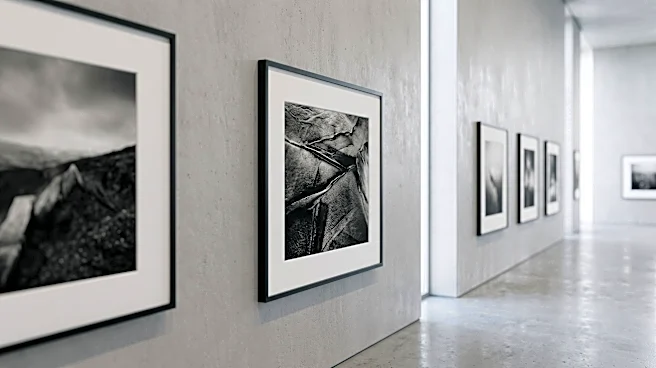
the 1955 incident in Mississippi. Curated by Sarah Elizabeth Lewis, the exhibit features over 110 photographs from the MoCP's collection, tracing a path from childhood to adulthood, and from the North to the South and back. The images are displayed without captions, allowing viewers to encounter works by photographers like Dorothea Lange and Gordon Parks without explicit identification. The exhibition includes diverse imagery such as prom nights, the Chicago Bulls, and a portrait of Barack Obama, with recurring motifs of train tracks symbolizing the journey Till never completed. Responses to the exhibition have been shared by figures including Ava DuVernay, John Legend, and Till's cousin, Reverend Wheeler Parker Jr. Newcity described the exhibition as 'heartbreaking' yet 'humming with life' rather than focusing on violence.
Why It's Important?
This exhibition is significant as it recontextualizes the tragic narrative of Emmett Till, shifting focus from his death to a potential life, thereby exploring themes of freedom, possibility, and the enduring impact of historical racial violence on American society. By presenting a speculative future, the MoCP encourages a deeper reflection on the systemic injustices of the Jim Crow era and the civil rights movement. The absence of captions for the photographs prompts viewers to engage more personally with the imagery, fostering individual interpretation and emotional connection to the broader historical context. The involvement of prominent figures like Ava DuVernay and John Legend amplifies the exhibition's reach and underscores its cultural relevance, ensuring that Till's legacy continues to be a subject of contemporary dialogue and artistic expression. This approach offers a unique educational opportunity to consider the 'what ifs' of history and their implications for understanding present-day social dynamics and racial justice efforts in the U.S.
What's Next?
The 'If Emmett Till Lived: Freedom on American Ground' exhibition is scheduled to conclude on December 19. Following its closure, the discussions and reflections it has generated are likely to continue within academic, artistic, and social justice communities. The museum's initiative to imagine an alternative narrative for Emmett Till could inspire similar projects that explore historical figures and events through a lens of speculative possibility, encouraging new forms of engagement with American history. The responses from public figures and the media suggest that the exhibition's themes will resonate beyond its physical presence, potentially influencing future artistic and educational endeavors related to civil rights and racial identity. The MoCP's innovative curatorial approach may also set a precedent for how museums address sensitive historical topics, fostering empathy and critical thinking among diverse audiences.
Beyond the Headlines
The exhibition delves into profound ethical and cultural dimensions by daring to imagine a life for Emmett Till. This speculative approach challenges the conventional narrative that often centers solely on his victimhood, instead inviting contemplation on the potential contributions and experiences he was denied. It implicitly highlights the immense loss to American society caused by racial violence, not just in terms of individual lives, but also in the unfulfilled potential and contributions that could have enriched the nation. By focusing on 'freedom on American ground,' the exhibition underscores the ongoing struggle for true liberty and equality for all citizens. It also serves as a powerful reminder of the psychological and emotional toll of historical injustices, prompting viewers to consider how past events continue to shape contemporary understandings of race, identity, and justice in the United States. The exhibition's design, which avoids explicit violence and instead emphasizes life and possibility, offers a healing and forward-looking perspective on a deeply painful chapter of American history.