

What's Happening?
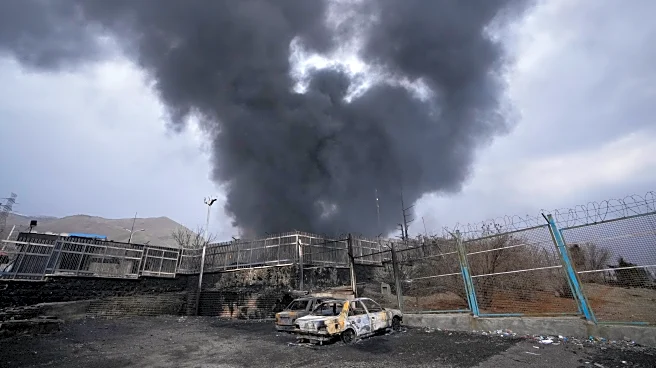
The ongoing conflict in Iran has led to a significant surge in global oil prices, with Brent and West Texas benchmarks exceeding $110 a barrel for the first time in nearly four years. This increase is attributed to the disruption of oil supplies as major
Middle Eastern producers curb output amidst the conflict. The situation has raised concerns about potential inflationary pressures in the U.S., where fuel prices have reached their highest levels since 2024. The Federal Reserve faces challenges in managing these pressures, especially as the U.S. labor market shows signs of contraction. The European Central Bank is also on alert, given Europe's vulnerability to energy price swings.
Why It's Important?
The rise in oil prices due to the Iran conflict poses a significant risk to global economic stability. For the U.S., the potential for sustained high fuel prices could exacerbate inflation, complicating the Federal Reserve's efforts to maintain economic stability. The situation is particularly precarious for Europe, which is more exposed to energy price fluctuations. The conflict also threatens global food security, as disruptions in fertilizer production in the Middle East could lead to reduced crop yields and higher food prices worldwide. This could have severe implications for poorer countries, potentially leading to increased hunger.
What's Next?
As the conflict continues, the U.S. and other global economies must prepare for prolonged economic impacts. The Federal Reserve may need to adjust its monetary policy to address inflationary pressures, while European countries might face more immediate challenges due to their energy dependencies. The global community will need to monitor the situation closely, particularly the potential for further disruptions in critical supply chains, such as fertilizers, which could exacerbate food security issues.
Beyond the Headlines
The Iran conflict highlights the interconnectedness of global markets and the potential for regional conflicts to have far-reaching economic impacts. The situation underscores the importance of diversifying energy sources and supply chains to mitigate the effects of geopolitical tensions. Additionally, the conflict may prompt a reevaluation of global energy policies and the need for increased investment in renewable energy to reduce reliance on volatile regions.