





What's Happening?
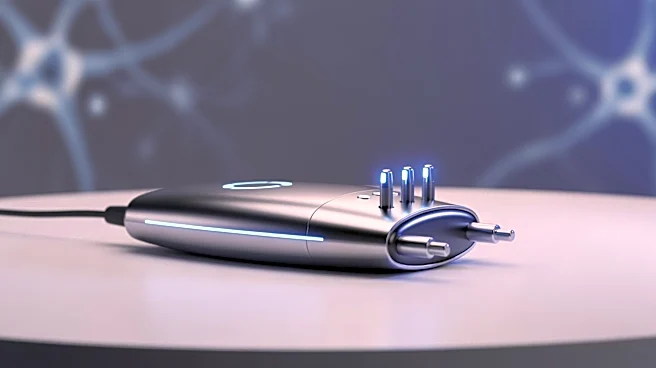
The FDA has approved a new device, the Flow FL-100, which uses transcranial direct-current stimulation (tDCS) to treat depression. Developed by Swedish company Flow Neuroscience, this device offers a non-pharmaceutical alternative to traditional antidepressants
like SSRIs. The device, which has been used in Europe, delivers weak electrical currents to the brain and is designed for home use under remote supervision. While the US trial showed modest improvements in depression symptoms, the device was cleared as a first-line treatment option, potentially shifting the focus in psychiatry from medication to alternative therapies.
Why It's Important?
The approval of the Flow FL-100 device by the FDA represents a significant development in mental health treatment, offering a new option for patients who may not respond well to traditional antidepressants. This could lead to a paradigm shift in how depression is treated, emphasizing non-invasive and non-pharmaceutical interventions. The device's approval also highlights the growing interest in neuromodulation technologies and their potential to complement or replace existing treatments. This could have broad implications for the mental health industry, potentially reducing reliance on medication and offering new hope for patients seeking alternative therapies.
What's Next?
As the Flow FL-100 becomes available in the US, it will be interesting to observe its adoption by healthcare providers and patients. The device's effectiveness and acceptance will likely be closely monitored, with further studies needed to confirm its long-term benefits and safety. The company plans to make the device available by prescription, which could influence its accessibility and integration into standard treatment protocols. Additionally, the success of this device could spur further innovation and development in the field of neuromodulation, potentially leading to new breakthroughs in mental health treatment.