
What's Happening?
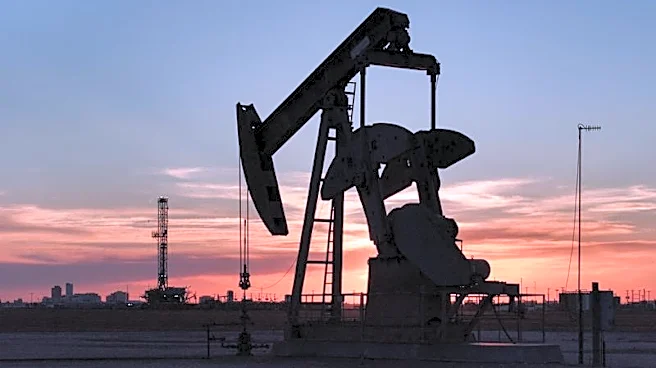
Global oil prices have experienced a significant decline, dropping by around 20% from their 2026 peaks. This decrease is attributed to growing optimism regarding a potential long-lasting ceasefire agreement
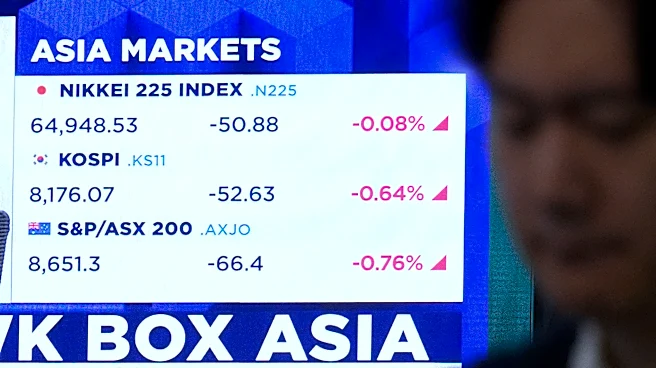
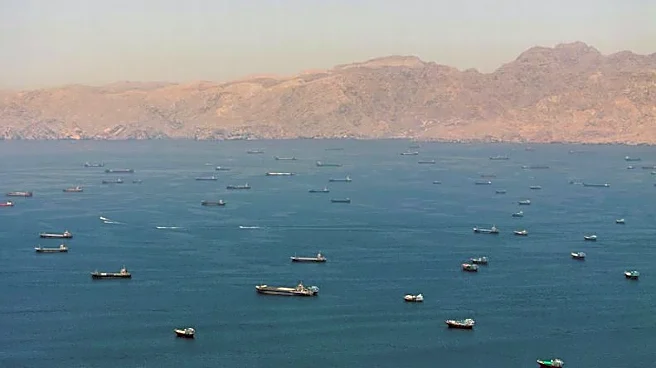
between the U.S. and Iran. The ceasefire is expected to facilitate the reopening of the Strait of Hormuz, a critical shipping lane for global energy supply. Brent crude, the international price benchmark, fell by 1.2% on the last trading day of May, marking a nearly 19% decline for the month. Similarly, U.S. West Texas Intermediate futures have decreased by 16.5% month-to-date. Despite the positive outlook for a ceasefire, security concerns persist due to ongoing missile strikes in the Gulf region.
Why It's Important?
The potential ceasefire between the U.S. and Iran could have significant implications for global energy markets. The Strait of Hormuz is a vital chokepoint for oil transportation, and its reopening could stabilize energy supplies and prices. However, the ongoing security concerns and missile strikes highlight the fragility of the situation. A stable ceasefire could lead to increased oil flow, potentially lowering prices and easing the energy crisis. Conversely, continued instability could disrupt supply chains and maintain high energy costs, affecting global economies and industries reliant on oil.
What's Next?
The next steps involve finalizing the ceasefire agreement, which requires approval from President Trump. If successful, the agreement could lead to increased oil shipments through the Strait of Hormuz, stabilizing global energy markets. However, stakeholders remain cautious, as the situation in the Gulf remains volatile. The international community will closely monitor developments, with potential reactions from major oil-importing countries and industries dependent on stable energy supplies.