



What's Happening?
A new book by W. Fitzhugh Brundage, titled 'A Fate Worse Than Hell: American Prisoners of the Civil War,' explores the grim realities of Civil War prison camps, particularly focusing on the notorious Andersonville camp. The book is part of a broader historical
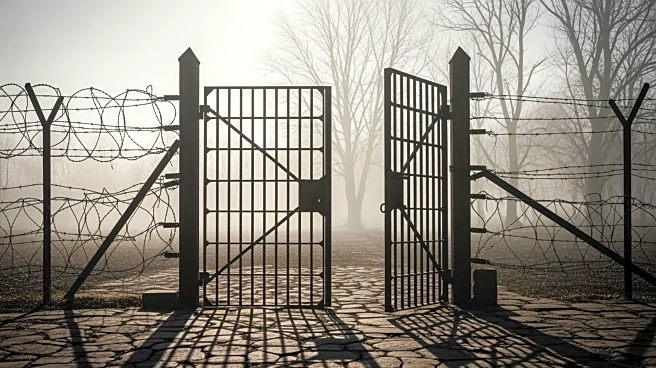
trend known as the 'dark turn,' which examines the war's cost and cruelty rather than its romanticized aspects. Brundage's work delves into the conditions faced by prisoners, highlighting the lack of sanitation, inadequate medical treatment, and high mortality rates. Andersonville, designed to hold 10,000 prisoners, saw its population swell to 33,000, with disease rampant and medical care severely lacking. The book also discusses the broader implications of these camps, including the evolution of war laws and the ethical responsibilities of combatants.
Why It's Important?
The book's exploration of Civil War prison camps provides a critical re-evaluation of historical narratives, challenging previous interpretations that often downplayed the suffering endured by prisoners. By highlighting the harsh conditions and high mortality rates, Brundage's work underscores the moral and ethical failures of both the Union and Confederate sides. This re-examination is significant as it contributes to ongoing discussions about the treatment of prisoners and the responsibilities of military and political leaders. The book also connects historical events to modern issues, such as the development of international humanitarian law and the prosecution of war crimes, emphasizing the lasting impact of these historical events on contemporary legal and ethical standards.
What's Next?
Brundage's book may prompt further scholarly research and public discourse on the Civil War's lesser-known aspects, particularly the treatment of prisoners. It could lead to renewed interest in the ethical considerations of wartime conduct and the responsibilities of military leaders. Additionally, the book's insights might influence how history is taught in educational settings, encouraging a more nuanced understanding of the Civil War. As discussions about historical accountability and the legacy of past conflicts continue, Brundage's work could serve as a catalyst for broader conversations about justice and reconciliation in the context of war.
Beyond the Headlines
The book raises important questions about the choices made by military and political leaders during the Civil War and their implications for modern warfare. It highlights the role of technology and organizational structures in enabling mass internment, drawing parallels to contemporary issues of mass incarceration and the ethical responsibilities of those in power. By examining the moral compromises made during the Civil War, Brundage's work encourages readers to consider the broader implications of these historical events on current societal and legal norms. The book also serves as a reminder of the importance of historical memory and the need to confront uncomfortable truths about the past.