
What's Happening?
NASA's Artemis lunar missions have traditionally targeted the moon's south pole due to its abundance of water ice, which is crucial for sustaining long-term lunar bases. However, Victor Glover, an astronaut
who piloted the Artemis II mission, has proposed a shift in strategy. Speaking at the NASA Exploration Science Forum, Glover suggested that landing near the moon's equator might be more practical. This area offers continuous daylight and quicker emergency return options to Earth, which could be vital for astronaut safety. The equatorial region's accessibility aligns with recent changes in the Artemis program, which aims to gradually expand mission goals. NASA's focus on the south pole is partly driven by competition with China, which is advancing its lunar program rapidly.
Why It's Important?
The suggestion to land near the lunar equator instead of the south pole could have significant implications for NASA's Artemis program. The equatorial region's continuous daylight and easier emergency return options could enhance astronaut safety, a critical factor in mission planning. Additionally, the urgency to land at the south pole is partly due to geopolitical competition with China, which is making strides in its lunar exploration efforts. If China were to establish a presence at the south pole first, it could impact global space dynamics, affecting the U.S. economy, innovation, and national security. Glover's proposal could influence NASA's strategy, balancing the need for safety with geopolitical considerations.
What's Next?
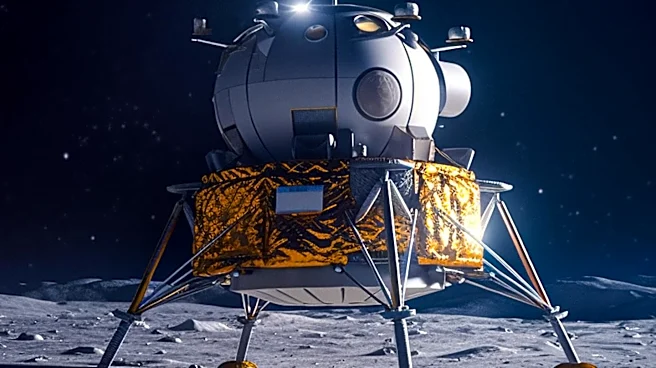
NASA's next Artemis mission, Artemis III, is scheduled for next year, aiming to test docking procedures with commercial lunar landers. The success of this mission is crucial for the planned Artemis IV moon landing in 2028. NASA must decide whether to adopt Glover's suggestion and shift the landing site to the equator, which could affect the timeline and objectives of the Artemis program. The decision will also consider the readiness of SpaceX's Starship and Blue Origin's Blue Moon landers, both facing delays. NASA's strategy will need to balance safety, technological readiness, and geopolitical factors as it moves forward.
Beyond the Headlines
The debate over landing sites highlights broader issues in space exploration, such as the ethical implications of territorial claims on celestial bodies. The competition between the U.S. and China for lunar dominance could lead to discussions about international space treaties and cooperation. Additionally, the focus on the south pole for its water ice resources underscores the importance of sustainable space exploration, which could pave the way for future missions to Mars. Glover's proposal may prompt NASA to reconsider its priorities, potentially leading to a more collaborative approach to lunar exploration.