




What's Happening?
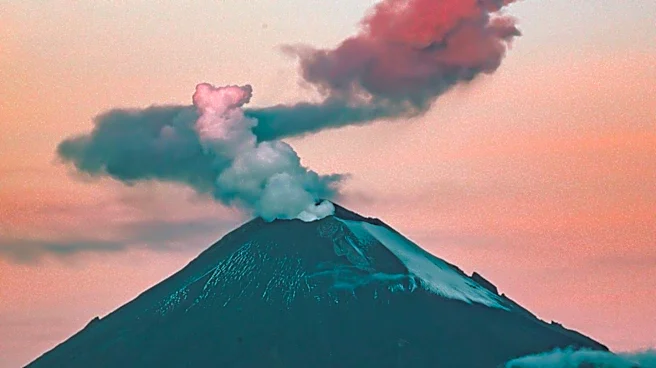
Guatemalan authorities have issued the country's second-highest emergency alert level following a significant eruption of the Fuego volcano, one of Central America's most active. The eruption, which began on a Monday morning, intensified by nightfall,
resulting in lava flows and ash plumes reaching up to six kilometers into the air. The Institute of Volcanology has warned that the volcano is moving towards a more explosive phase, with ashfall affecting nearby communities. As a precaution, officials have evacuated two villages near the volcano, located 35 kilometers from Guatemala City. This event is part of a pattern of frequent seismic and volcanic activity in the region, which lies on the Pacific 'Ring of Fire'.
Why It's Important?
The eruption of the Fuego volcano poses significant risks to the local population and infrastructure. The evacuation of villages highlights the immediate threat to human life and property. The volcanic activity can disrupt air travel, affect agriculture due to ashfall, and pose long-term health risks to residents. The alert level indicates a serious emergency, necessitating swift action to prevent casualties. This event underscores the vulnerability of regions situated along the Pacific 'Ring of Fire' to natural disasters, emphasizing the need for robust emergency preparedness and response strategies.
What's Next?
Authorities will continue to monitor the volcanic activity closely, with the potential for further evacuations if the situation worsens. The Institute of Volcanology will provide ongoing updates on the volcano's status. Local governments may need to implement additional safety measures, such as closing roads and suspending flights, to protect residents and travelers. The international community may offer support in terms of disaster relief and technical assistance to manage the crisis effectively.