







What's Happening?
The U.S. Congress is set to welcome a record number of six lawmakers of Chinese descent following Dr. Richard Pan's victory in California's 6th Congressional District. Dr. Pan, a 61-year-old doctor and son of Taiwanese immigrants, secured his seat by
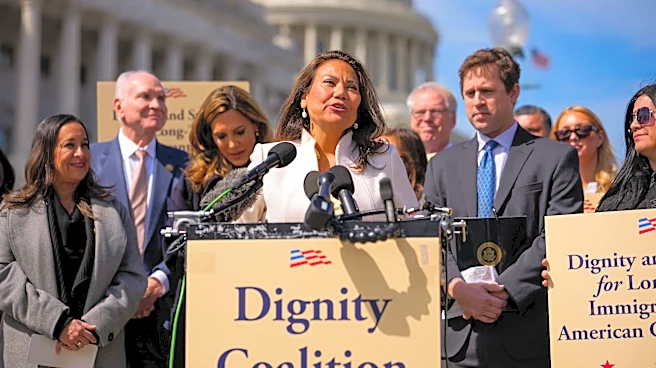
a 15-percentage-point margin. He previously served in the California legislature from 2010 to 2022, focusing on public health issues and chairing the California Asian Pacific Islander Legislative Caucus. His election increases the total number of Chinese-American representatives in Congress to six, including four other House members: Republican Vince Fong and Democrats Judy Chu and Ted Lieu, all from California, and Grace Meng of New York. Senator Tammy Duckworth, an Illinois Democrat of Thai and Chinese ancestry, also contributes to this count. This development is seen as a significant step for Asian-American representation in U.S. politics.
Why It's Important?
The increase in Chinese-American representation in Congress is significant for several reasons. Congresswoman Judy Chu emphasized that such representation ensures Asian-Americans feel a sense of belonging in government and that their lived experiences are reflected in policymaking. This growing diversity is crucial for advocating for the needs and concerns of the Asian-American community, particularly in a political climate where issues like land ownership restrictions and rhetoric framing Asian-Americans as caught between U.S.-China competition are prevalent. The presence of more Chinese-American lawmakers provides a stronger voice to educate their peers and counter harmful stereotypes, as demonstrated by a joint statement from Representatives Meng, Lieu, and Chu condemning comments advocating for the internment of Chinese-Americans. This increased representation aims to strengthen the ability to advocate for diverse communities and ensure they are seen, heard, and represented in the halls of power.
What's Next?
With Dr. Richard Pan joining Congress, the focus will likely be on how this increased representation translates into legislative action and policy changes. Dr. Pan has stated his intention to work on lowering costs for working families, protecting access to healthcare, defending democracy, and ensuring the Asian-American community has more champions in Washington. The Congressional Asian Pacific American Caucus, previously chaired by Congresswoman Chu and now led by Congresswoman Meng, is expected to continue its efforts in advocating for Asian-American interests. The growing number of Asian-American lawmakers may lead to a more robust and unified voice on issues affecting their communities, potentially influencing future legislation and public discourse. This trend also highlights the evolving demographic landscape of the U.S. and its impact on political representation.
Beyond the Headlines
The rise in Chinese-American representation in Congress reflects a broader demographic shift and an increasing political engagement within the Asian-American community. This development challenges historical underrepresentation and aims to dismantle the 'perpetual foreigner' stereotype that has often affected Asian-Americans. The emphasis on lived experiences being reflected in policymaking underscores the importance of identity politics and the belief that diverse perspectives lead to more inclusive and effective governance. This trend could also inspire greater civic participation among Asian-American communities, leading to further political mobilization and advocacy. The long-term implications include a more diverse and potentially more representative legislative body, which could foster a deeper understanding of the complex issues facing various ethnic groups within the United States.