



What's Happening?
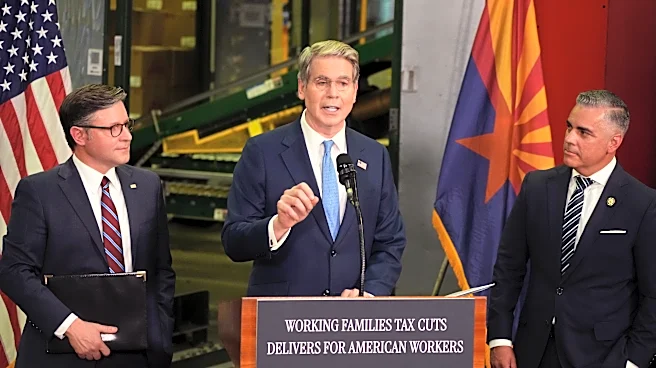
Treasury Secretary Scott Bessent has announced that the Trump administration is intensifying efforts to prevent undocumented immigrants from exploiting the U.S. financial system. Speaking to bankers in Arizona, Bessent emphasized the administration's
commitment to curbing financial fraud and illicit activities linked to unauthorized employment. This initiative follows an executive order signed by President Trump in May, titled 'Restoring Integrity to America's Financial System,' which mandates federal agencies to enhance oversight of financial activities associated with undocumented workers. The order outlines a timeline for implementing new regulations, including advisories and guidance within 60 days, a proposed customer due-diligence rule within 90 days, and a customer identification proposal by November. Bessent highlighted the role of banks in identifying and reporting suspicious activities, while the Treasury Department aims to provide better tools for fraud detection.
Why It's Important?
This crackdown is significant as it reflects the administration's broader immigration policy and its impact on the financial sector. By targeting undocumented immigrants' access to financial services, the administration aims to reduce fraud and protect the integrity of the financial system. However, this move could also affect banks' operations, requiring them to enhance their compliance measures and customer due diligence. Legal and tax analysts have noted that the effectiveness of these measures will depend on the specific regulations implemented. The initiative may also influence multinational employers and global mobility programs, potentially slowing down account openings and increasing documentation requirements for employees using Individual Taxpayer Identification Numbers.
What's Next?
Federal regulators are expected to issue credit-risk guidance and clarify the ability-to-repay criteria by July 20, with the Treasury Department proposing changes to customer due-diligence rules by August 17. A broader customer identification proposal is due by November 16. As these regulations take shape, banks and financial institutions will need to adapt their compliance programs to meet the new requirements. The administration's focus on financial integrity may lead to further policy developments aimed at tightening financial oversight and reducing risks associated with unauthorized employment.