







What's Happening?
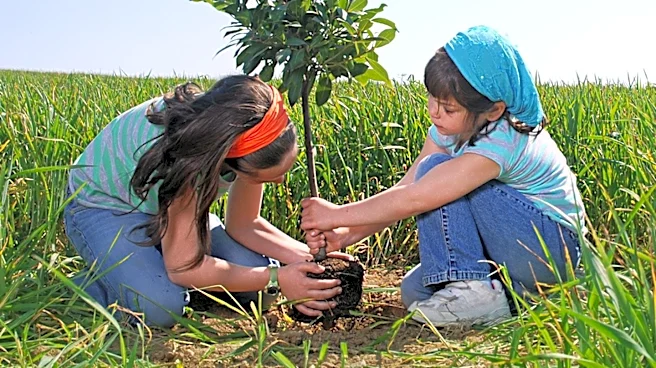
The Tree Council, in collaboration with Defra, has launched a £2.5 million fund aimed at increasing tree planting in urban areas across the UK. This initiative, known as the Trees Outside Woodland Fund, offers grants ranging from £10,000 to £40,000 to support
local authority and charity-led projects. The fund is designed to promote the establishment of trees in parks, playgrounds, and streets, enhancing urban green spaces. In its initial year, the fund facilitated the planting of 175,000 trees across 2,645 sites. The initiative aims to provide shade, improve mental health, reduce flash flooding risks, and support biodiversity by creating habitats for various species. The fund requires applicants to demonstrate community benefits and biodiversity enhancement, with a streamlined application process now in place.
Why It's Important?
This fund is significant as it addresses the need for more green spaces in urban areas, which are crucial for environmental and public health. Trees in urban settings can mitigate the urban heat island effect, improve air quality, and provide recreational spaces for communities. By enhancing biodiversity, the initiative supports ecological balance and offers habitats for wildlife. The fund also aligns with broader governmental goals to invest in environmental restoration and create new national forests, reflecting a commitment to sustainable development and climate change mitigation. Communities stand to gain improved living conditions and increased access to nature, which can enhance quality of life and community well-being.
What's Next?
Applications for the fund are open until October 31, 2026, or until all funds are allocated. The Tree Council is hosting an online Q&A session for potential applicants to provide guidance on the application process. Successful projects will need to comply with the Biosecure Procurement Requirement, ensuring trees are sourced from certified nurseries. The initiative is expected to continue fostering community involvement in environmental projects, potentially leading to more widespread adoption of urban greening practices. As the fund progresses, it may serve as a model for similar initiatives in other regions, promoting sustainable urban development.