


What's Happening?
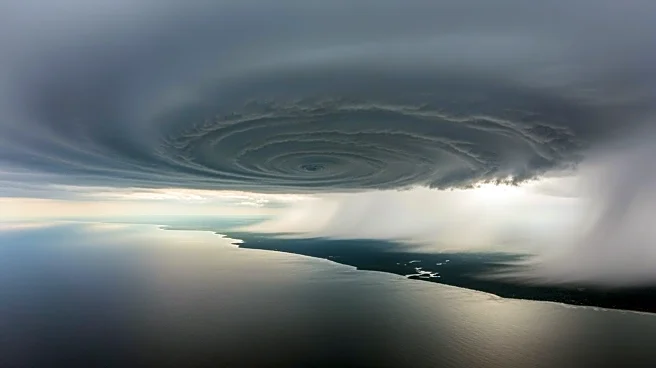
Tropical Cyclone Narelle has made a significant impact on northern Australia, as observed by NASA's Earth Observatory. The cyclone, which intensified over the Coral Sea, reached category 5 on Australia's tropical cyclone scale, equivalent to a category 4
hurricane on the Saffir-Simpson scale. With maximum sustained winds of up to 225 kilometers per hour, Narelle made landfalls in three different states and territories between March 20 and 23, 2026. The cyclone first hit the Cape York Peninsula in Queensland, then moved over the Gulf of Carpentaria, making a second landfall in the Northern Territory with winds up to 148 kilometers per hour. The storm brought over 100 millimeters of rain, causing minor to major flooding in several rivers. After crossing the Northern Territory, Narelle reached the northern Kimberley region of Western Australia as a tropical low. The Bureau of Meteorology has warned that Narelle could re-intensify and continue to affect the region.
Why It's Important?
The impact of Tropical Cyclone Narelle highlights the vulnerability of northern Australia to severe weather events, particularly during the wet season. The cyclone's path and intensity underscore the challenges faced by communities in these regions, which are already dealing with the consequences of a severe wet season. The potential for re-intensification of the storm poses ongoing risks to infrastructure, agriculture, and local populations. The situation also emphasizes the importance of accurate weather forecasting and timely warnings to mitigate the effects of such natural disasters. The data collected by NASA and other meteorological agencies play a crucial role in understanding and predicting the behavior of cyclones, which is vital for disaster preparedness and response efforts.
What's Next?
As Tropical Cyclone Narelle continues its trajectory, the Bureau of Meteorology is closely monitoring its potential re-intensification off the coast of Western Australia. If the cyclone regains strength, it could pose further threats to coastal communities, particularly if it tracks south towards Perth. Authorities are likely to issue additional warnings and advisories to ensure public safety. Emergency services and local governments may need to prepare for possible evacuations and implement measures to protect critical infrastructure. The ongoing monitoring and analysis of Narelle's path will be essential in coordinating effective response strategies and minimizing the impact on affected regions.