


What's Happening?
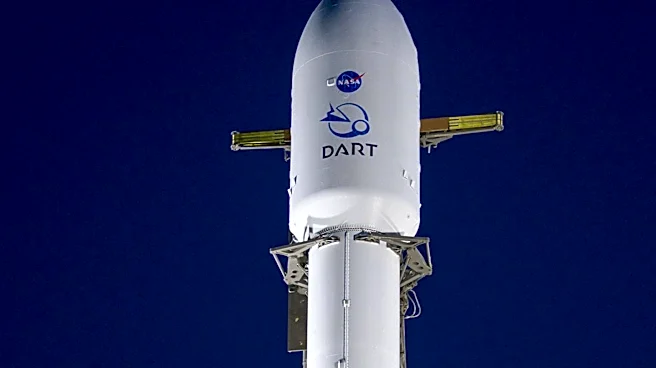
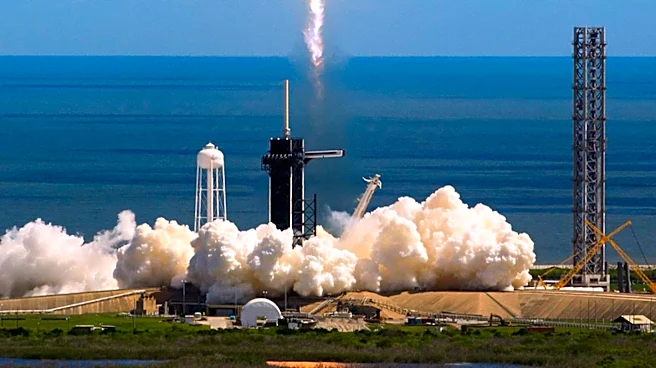
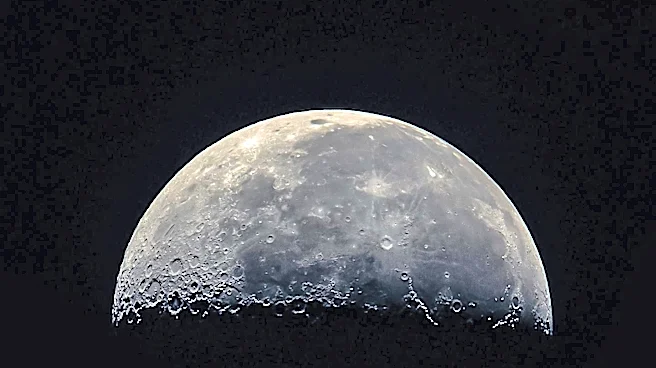
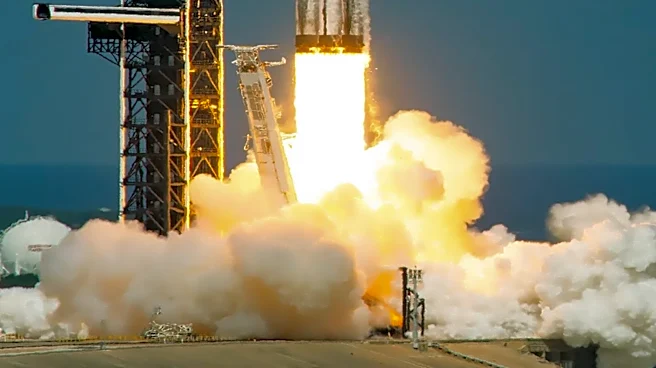
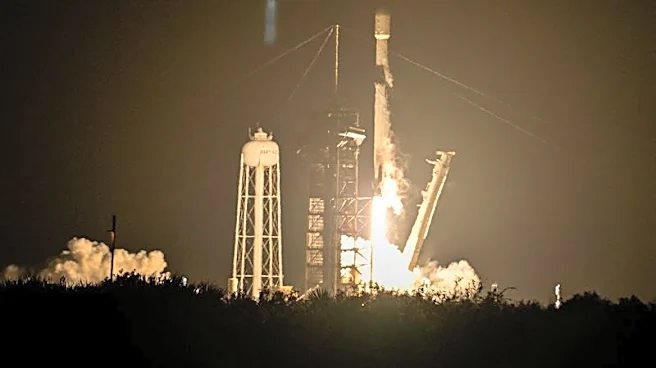
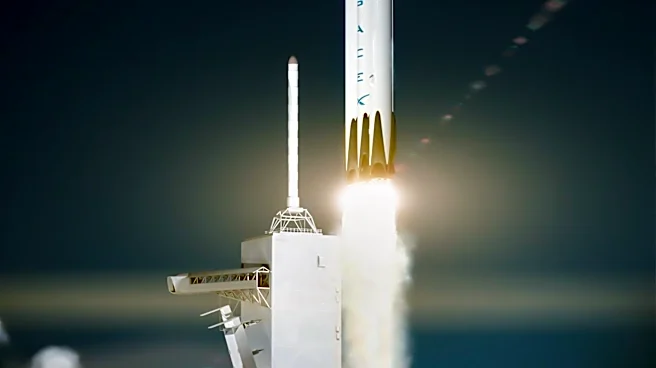
A SpaceX Falcon 9 rocket's upper stage has crashed into the moon, prompting efforts to capture images of the impact site. The crash occurred at approximately 2:35 a.m. EDT on August 5, 2026. NASA's Lunar Reconnaissance Orbiter and the Korea Pathfinder
Lunar Orbiter's ShadowCam are tasked with capturing before-and-after imagery of the site. The rocket's upper stage, weighing 9,000 pounds, was unable to return to Earth's atmosphere after launching two private lunar landers in January 2025. The impact is expected to have created a crater up to 89 feet wide, offering researchers a unique opportunity to study the effects of artificial impacts on the lunar surface.
Why It's Important?
The crash of the SpaceX rocket on the moon provides a rare chance for scientists to study the impact of artificial objects on the lunar surface. The data collected from this event can enhance our understanding of lunar geology and the potential hazards posed by space debris. This knowledge is crucial for future lunar exploration missions, as it can inform the design and placement of lunar infrastructure. Additionally, the event highlights the challenges and complexities of space missions, particularly those involving high-energy trajectories.
What's Next?
Researchers are eagerly awaiting images from the lunar orbiters to analyze the impact site and any resulting plumes. These observations will contribute to ongoing studies of lunar impacts and their implications for future exploration. The findings may also inform policies and practices related to space debris management. As the scientific community processes the data, it may lead to new insights into the moon's surface and the effects of human activity in space.