





What's Happening?
NASA's Hubble Space Telescope has released a new image showcasing over 500,000 stars in the Messier 3 (M3) globular cluster. This image, shared in celebration of the United States' 250th anniversary, highlights one of the largest and most impressive globular clusters
in the Milky Way. Globular clusters are dense, spherical collections of stars that formed from the same gas cloud billions of years ago. M3 is notable for its large population of RR Lyrae variable stars and blue stragglers, which provide valuable insights into stellar evolution and the history of the Milky Way.
Why It's Important?
The image of Messier 3 offers astronomers a detailed view of a globular cluster, which serves as a living record of the Milky Way's past. The presence of RR Lyrae variable stars allows researchers to measure distances accurately, enhancing our understanding of the galaxy's structure. Additionally, the discovery of blue stragglers in M3 provides clues about stellar interactions and the dynamics within globular clusters. This information is crucial for piecing together the Milky Way's formation and evolution over billions of years.
What's Next?
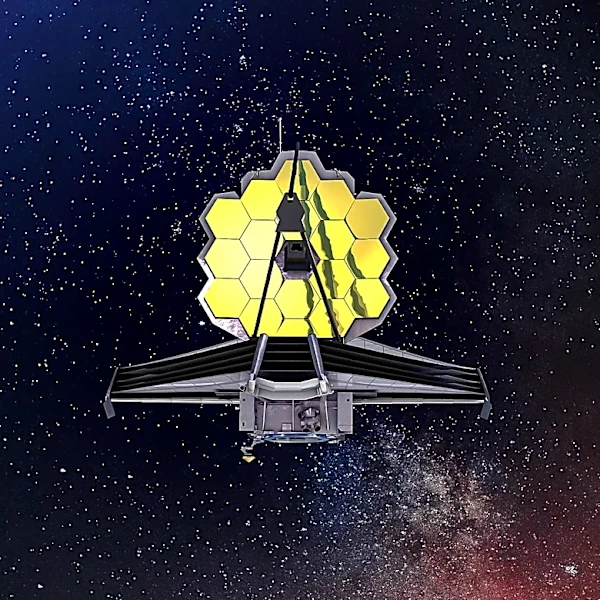
Hubble's observations of Messier 3 are part of a broader survey of the Milky Way's globular clusters. By comparing these ancient stellar systems, astronomers aim to construct a comprehensive timeline of the galaxy's development. Future studies will continue to explore the unique characteristics of M3 and other clusters, potentially revealing more about the processes that shaped our galaxy. Hubble, alongside other telescopes like the James Webb Space Telescope, will play a key role in these ongoing investigations.
Beyond the Headlines
The study of globular clusters like Messier 3 not only enhances our understanding of the Milky Way but also contributes to broader cosmological research. These clusters serve as benchmarks for testing theories of stellar evolution and galactic dynamics. The insights gained from such studies can inform models of galaxy formation and the behavior of stars in different environments.