










What's Happening?
Regional earthquake experts are calling for more coordination and investment to prepare for a potential massive earthquake, known as the 'Big One,' expected to hit the Northwest in the next 50 years. The Cascadia Subduction Zone, which runs off the coasts
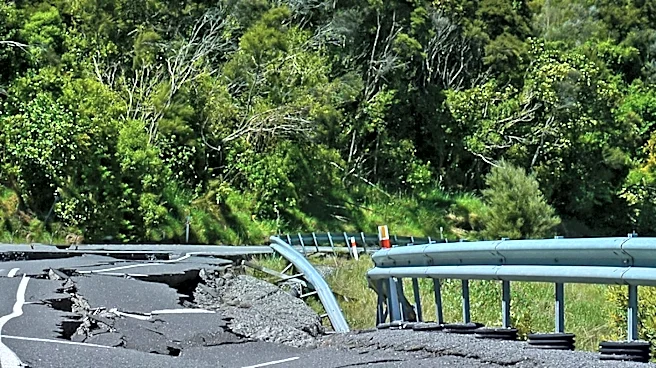
of Oregon, Washington, and California, is projected to produce a 7.4 or greater magnitude earthquake. This event could lead to significant geological changes, including coastline retreat, flooding, and landslides, potentially displacing millions. The Cascadia Lifelines Program, a multi-agency initiative based at Oregon State University, is actively discussing strategies to mitigate the impact of such an earthquake. Recent efforts include retrofitting critical infrastructure like the Portland International Airport and the state Capitol to withstand seismic activity. However, experts stress the need for urgent policy implementation to retrofit essential transportation routes and promote community resilience through microgrids and battery storage.
Why It's Important?
The potential impact of the 'Big One' on the Northwest is profound, with the possibility of widespread infrastructure damage and human displacement. The economic and social implications are significant, as the region could face long-term recovery challenges. The call for increased investment and coordination highlights the need for proactive measures to protect critical infrastructure and ensure community resilience. Failure to act could result in catastrophic consequences, including loss of life, economic downturn, and prolonged recovery efforts. The emphasis on retrofitting and policy implementation underscores the importance of preparedness in mitigating the effects of natural disasters.
What's Next?
In the coming weeks, discussions between the Port of Portland and the governor's office are expected to address potential budget requests for infrastructure upgrades. There is also a push for legislative action to require regular reporting on earthquake preparedness by regional utilities. These steps aim to enhance transparency and collaboration among stakeholders. Additionally, experts are advocating for the development of a disaster response workforce to manage the extensive recovery efforts anticipated after the earthquake. The focus on critical corridors and infrastructure resilience will likely continue to be a priority in policy discussions.
Beyond the Headlines
The broader implications of this initiative extend beyond immediate disaster preparedness. The emphasis on infrastructure resilience and community microgrids reflects a shift towards sustainable and self-sufficient energy solutions. This approach not only addresses earthquake preparedness but also contributes to long-term environmental and economic sustainability. The collaboration among regional stakeholders highlights the importance of collective action in addressing large-scale challenges. As awareness of the potential risks increases, there may be a cultural shift towards prioritizing disaster readiness and resilience in public policy and community planning.