





What's Happening?
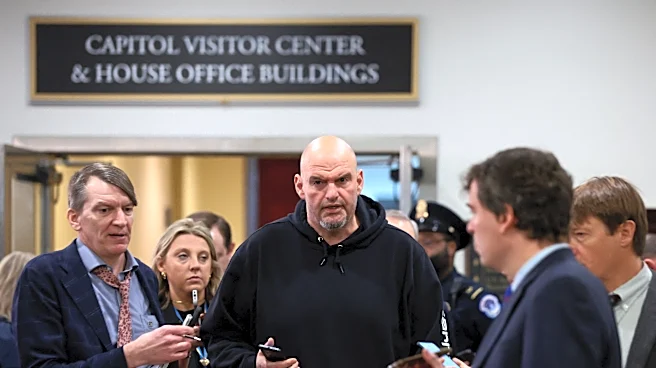
U.S. Senator John Fetterman has responded to recent criticism from former staffers, labeling the allegations as 'smears' and a 'hit piece.' The criticism, initially reported in a Wall Street Journal article, claimed that Fetterman missed numerous hearings,
public appearances—including events with veterans and health officials—and even a funeral for fallen police officers. The report also suggested he prioritized interviews with conservative media outlets. In response, Senator Fetterman, through a statement to CNN, refuted these claims, asserting they were 'lies, half-truths, innuendos, smears and anonymous' from 'disgruntled staffers.' He also apologized for some comments revealed in the Wall Street Journal report but maintained his commitment to delivering for Pennsylvania. The criticism extended to members of his own party, with U.S. Rep. Madeleine Dean of Pennsylvania's 4th Congressional District reportedly stating that Democratic voters would 'want to replace him.'
Why It's Important?
This situation is important as it highlights the challenges faced by public officials in managing their duties and public perception, especially when dealing with health issues or internal staff disagreements. The allegations of missed engagements and prioritizing certain media outlets can erode public trust and raise questions about a senator's effectiveness and commitment to their constituents. For Senator Fetterman, who has openly discussed his health struggles, these criticisms could complicate his political standing and future electoral prospects. The involvement of a fellow Democratic representative, Madeleine Dean, also underscores potential internal party divisions or concerns about Fetterman's performance. Conversely, the defense from Republican Senator Dave McCormick, who called the leaks 'outrageously disloyal staff and forces on the Left,' suggests a complex political dynamic where personal attacks can transcend party lines, or be used to frame narratives.
What's Next?
Senator Fetterman's office has not yet responded to further inquiries regarding the controversy, indicating that the situation may continue to unfold. The initial reports and Fetterman's strong denial suggest that this issue could remain a topic of discussion in political circles and media. Depending on how the narrative evolves, there could be further investigations or public statements from Fetterman's office or other political figures. The criticism from within his own party, as voiced by Representative Dean, might prompt internal discussions or pressure within the Democratic Party regarding Fetterman's role and responsibilities. The ongoing debate could also influence public opinion in Pennsylvania, potentially impacting Fetterman's approval ratings and his ability to effectively legislate and represent his constituents in the long term.
Beyond the Headlines
Beyond the immediate political implications, this story touches on the broader issue of public service and the intense scrutiny faced by elected officials. It raises questions about the balance between a public servant's personal well-being and their professional obligations, especially in high-pressure roles. The use of anonymous sources in critical reports also brings to light the ethical considerations of journalism and the potential for 'hit pieces' to influence public discourse. Furthermore, the differing reactions from within and across political parties highlight the partisan nature of media narratives and how criticisms can be leveraged for political gain. This incident could also spark a wider conversation about the support systems available to elected officials, particularly those dealing with health challenges, and how their performance is evaluated by both their peers and the public.