



What's Happening?
The United States Department of Agriculture (USDA) has announced a new $700 million pilot program aimed at promoting regenerative agriculture practices. This initiative is designed to enhance soil health and provide farmers with incentives to adopt sustainable
farming methods. The program emphasizes outcome-based, voluntary conservation efforts, aiming to simplify the process for farmers to engage in conservation practices. The USDA's approach includes cutting red tape and offering straightforward tools to make conservation more accessible to farmers. This initiative is part of a broader effort to support sustainable agriculture and improve the long-term viability of farmland across the United States.
Why It's Important?
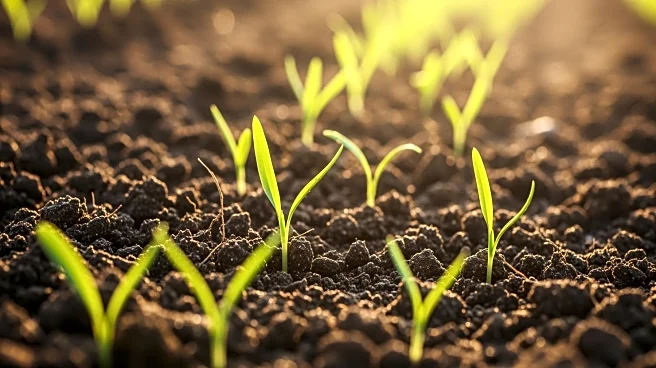
The USDA's pilot program is significant as it addresses critical issues related to soil health and sustainable farming practices. By incentivizing farmers to adopt regenerative agriculture, the program aims to improve soil quality, increase biodiversity, and enhance the resilience of agricultural systems against climate change. This initiative could lead to more sustainable food production, reduce environmental impacts, and support the economic viability of farms. The program's focus on voluntary and outcome-based conservation could also serve as a model for future agricultural policies, potentially influencing broader adoption of sustainable practices across the industry.
What's Next?
As the program rolls out, the USDA will likely monitor its impact on soil health and farmer participation. The success of this pilot could lead to expanded funding and support for regenerative agriculture practices nationwide. Stakeholders, including farmers, environmental groups, and policymakers, will be watching closely to assess the program's effectiveness and scalability. The initiative may also prompt discussions on how to integrate similar practices into existing agricultural policies and frameworks, potentially influencing future legislative efforts aimed at promoting sustainable agriculture.