






What's Happening?
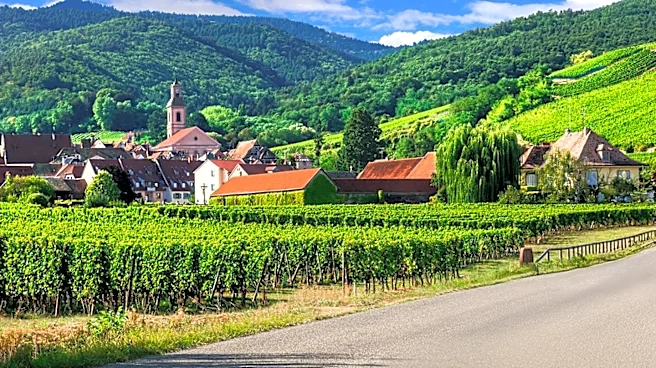
Europe offers numerous cross-border road trip opportunities, allowing travelers to experience multiple countries within short driving distances. Popular routes include the Alpine loop connecting France, Switzerland, and Italy, the Dalmatian coast extending
to Montenegro, the Via Baltica from Tallinn to Vilnius, and the Rhine valley traversing Germany, France, and Switzerland. These trips are characterized by changing scenery every hundred kilometers and the ease of crossing borders, particularly within the Schengen area where most borders are marked only by a blue star sign. The ability to have breakfast in one country and dinner in another without extensive travel logistics is a key appeal. Travelers are advised to consider the season, as high mountain roads may close in winter, and to plan for country-specific requirements like motorway vignettes and local currencies.
Why It's Important?
The prevalence of cross-border road trips in Europe highlights a unique aspect of travel within the continent, offering a distinct experience compared to road trips in larger, single-country regions like the United States. The ease of movement between nations, facilitated by agreements like the Schengen Area, fosters cultural exchange and economic activity across borders. This model of travel supports local tourism economies in multiple countries simultaneously, benefiting small businesses, cafes, and accommodations along these routes. For travelers, it provides an efficient way to immerse themselves in diverse European cultures, landscapes, and historical sites within a single journey, maximizing their travel experience and exposure to different European identities. The logistical considerations, such as eSIM usage for continuous GPS and data, also underscore the evolving technological solutions supporting modern international travel.
What's Next?
As cross-border travel continues to be a popular option, the development of integrated travel solutions, such as universal eSIMs covering multiple countries, is likely to expand. Travelers can anticipate more streamlined processes for navigating different national regulations, including digital solutions for purchasing motorway vignettes and understanding local driving laws. The tourism industry will likely continue to promote these multi-country itineraries, potentially developing more themed routes that highlight specific cultural, historical, or natural attractions. Furthermore, as technology advances, real-time information on road conditions, border wait times, and local services will become even more accessible, enhancing the planning and execution of these complex journeys. The focus will remain on making these diverse travel experiences as seamless and enjoyable as possible for international visitors.
Beyond the Headlines
The ease of cross-border travel in Europe, particularly within the Schengen area, reflects a deeper political and social integration that has profound implications beyond tourism. It symbolizes a continent that has largely moved past historical divisions, fostering a sense of shared European identity and facilitating economic cooperation. This seamless movement of people and goods contributes to a more interconnected and interdependent Europe, influencing everything from trade policies to cultural trends. The logistical challenges that remain, such as varying road regulations and non-EU roaming zones, serve as reminders of the ongoing complexities within this integrated system. These road trips, therefore, are not just leisure activities but also tangible manifestations of a unique geopolitical landscape, offering insights into the balance between national sovereignty and continental unity.