
What's Happening?
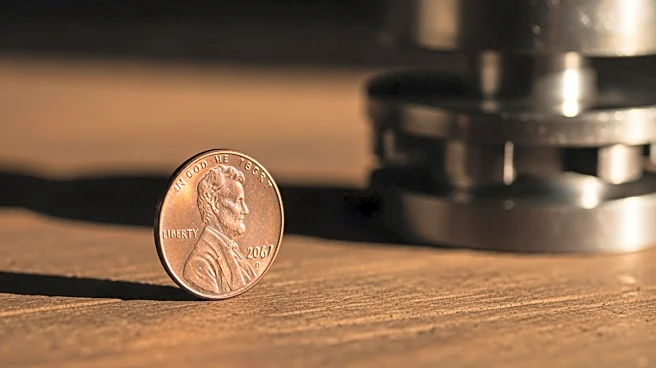
The U.S. Mint has officially ended the production of the Lincoln cent, marking a significant shift in U.S. coinage policy. This decision follows a directive from President Trump aimed at reducing government
spending. The penny, which historically accounted for a large portion of the Mint's output, was last produced in July 2025, with only ceremonial pieces struck since then. In November 2025, the Mint's total coin production for circulation, including nickels, dimes, quarters, and half dollars, was 130.28 million, a sharp decline from previous months. This represents a 64.5% decrease from September and a 78.4% drop from November 2024. The Mint's decision to cease penny production is part of a broader strategy to streamline operations and reduce costs.
Why It's Important?
The cessation of penny production is a notable development in U.S. monetary policy, reflecting a shift towards more cost-effective coinage. The penny has been a staple of American currency for over two centuries, but its production cost, which exceeded its face value, has long been a point of contention. By halting its production, the U.S. Mint aims to cut down on unnecessary expenses, aligning with broader fiscal policies to reduce wasteful spending. This move could influence other countries to reconsider the viability of low-denomination coins. Additionally, the reduction in overall coin production may impact businesses and financial institutions that rely on physical currency, potentially accelerating the shift towards digital transactions.
What's Next?
With the penny's production officially ended, the U.S. Mint will focus on meeting the demand for other denominations. The Mint will continue to produce coins for circulation, including nickels, dimes, quarters, and half dollars, while also catering to collectors with special editions. The transition away from the penny may prompt further discussions on the future of physical currency in the U.S., especially as digital payment methods become more prevalent. Financial institutions and businesses may need to adjust their operations to accommodate these changes, potentially leading to innovations in cash handling and transaction processing.