


What's Happening?
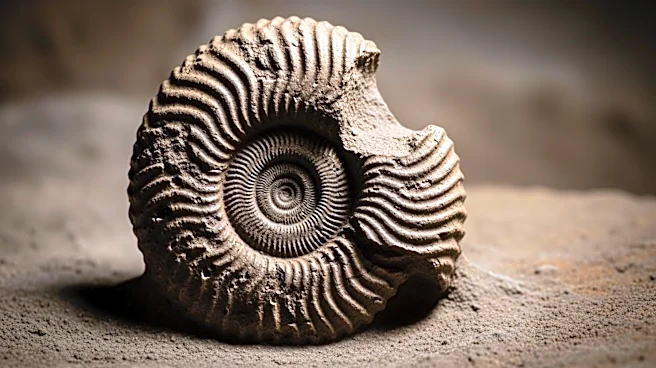
A 300-million-year-old fossil previously identified as the world's oldest octopus has been reclassified as a relative of the nautilus. The fossil, known as Pohlsepia mazonensis, was found in Illinois and initially thought to be an octopus, challenging
previous understandings of octopus evolution. However, recent research led by University of Reading zoologist Thomas Clements used advanced imaging techniques to reveal features inconsistent with octopuses, such as a radula with 11 teeth, compared to the seven or nine found in octopuses. This discovery has led Guinness World Records to retract its listing of Pohlsepia mazonensis as the earliest known octopus.
Why It's Important?
This reclassification has significant implications for the understanding of cephalopod evolution. The initial identification of Pohlsepia mazonensis as an octopus suggested that octopuses emerged much earlier than previously thought, creating a large gap in the fossil record. By correctly identifying the fossil as a nautilus relative, scientists can now better align the evolutionary timeline of cephalopods, providing a clearer picture of their development. This finding also highlights the importance of using advanced technology in paleontology to reassess historical classifications and improve scientific accuracy.