
What's Happening?
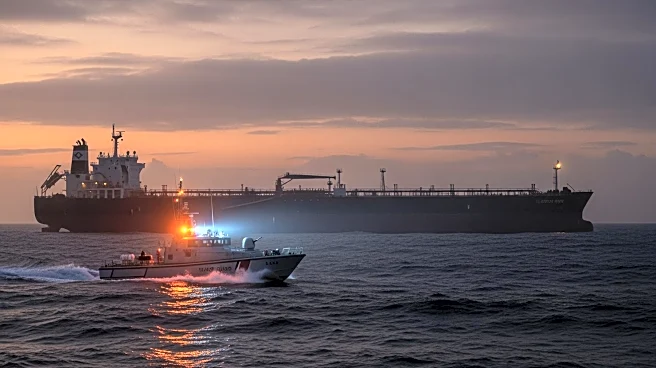
Oil prices have increased following a U.S. Coast Guard operation to intercept an oil tanker near Venezuela, which U.S. officials claim is involved in evading sanctions. This marks the third such interception
this month, following President Trump's recent announcement of a blockade on sanctioned oil tankers entering and leaving Venezuela. The interception is part of broader U.S. efforts to enforce sanctions against Venezuela, whose crude oil accounts for about 1% of global supply, primarily purchased by China. Additionally, oil prices are influenced by Ukrainian drone attacks on Russian ships in the Black Sea, a critical region for Russian energy exports. These geopolitical tensions have contributed to a rise in Brent crude and U.S. West Texas Intermediate crude futures.
Why It's Important?
The interception of oil tankers by the U.S. Coast Guard highlights the ongoing geopolitical tensions surrounding Venezuela's oil exports and the enforcement of international sanctions. The U.S. blockade aims to curb Venezuela's ability to circumvent sanctions, potentially disrupting global oil supply chains. This situation underscores the fragile nature of international oil markets, where geopolitical events can significantly impact prices and supply stability. The involvement of major players like China and the U.S. in these tensions could lead to broader economic and diplomatic repercussions, affecting global trade and energy security. The rising oil prices also reflect market concerns over potential supply disruptions from both Venezuela and the Black Sea region.
What's Next?
Future developments may include continued U.S. enforcement actions against Venezuelan oil exports, potentially leading to further geopolitical tensions with China, a major buyer of Venezuelan crude. The situation could escalate if diplomatic resolutions are not reached, impacting global oil markets and international relations. Additionally, ongoing talks between U.S., European, and Ukrainian officials aim to address the broader geopolitical tensions involving Russia and Ukraine, which could influence future oil supply dynamics. Stakeholders in the energy sector will likely monitor these developments closely, as they could affect global energy prices and supply chains.