
What's Happening?
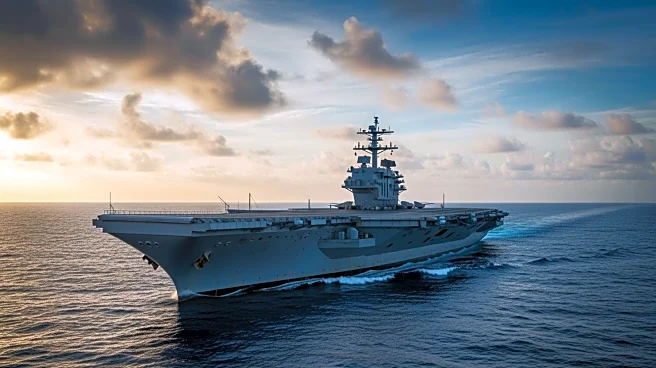
The USS Gerald R. Ford, a nuclear-powered aircraft carrier, has been deployed in the Caribbean Sea as part of the United States' Operation Southern Spear. This deployment, which began in November, aims
to support counter-narcotic operations and has significantly increased U.S. military presence in the region. The carrier's presence comes amid heightened tensions with Venezuela, where it has conducted aircraft sorties for surveillance and as a show of force against President Nicolás Maduro's regime. The U.S. military has intensified strikes on suspected drug-smuggling vessels, raising questions about the legitimacy of these actions and human rights concerns.
Why It's Important?
The deployment of the USS Gerald R. Ford highlights the U.S. military's strategic interest in the Caribbean, particularly in relation to Venezuela. This move could be seen as a pressure tactic against the Maduro regime, which has been a point of contention in U.S.-Venezuelan relations. The presence of such a significant military asset in the region underscores the U.S.'s commitment to counter-narcotic operations but also raises concerns about potential military escalation. The situation could impact U.S. foreign policy and its relations with other countries in the region, as well as influence domestic political discussions about military interventions.
What's Next?
The carrier is expected to continue its operations in the Caribbean, potentially increasing maritime monitoring near Venezuelan waters. As tensions remain high, there is a risk of military confrontation, which could lead to further international diplomatic efforts or sanctions. The U.S. administration may face pressure from lawmakers and human rights organizations to clarify the scope and objectives of its military presence in the region.