



What's Happening?
On November 1, 2026, President Claudia Sheinbaum unveiled the Day of the Dead altar at the Palacio Nacional in Mexico City. In a message to the public, President Sheinbaum emphasized the critical importance of preserving popular traditions for recognizing
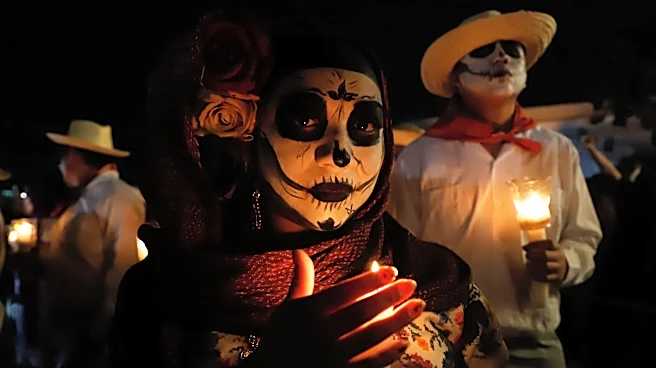
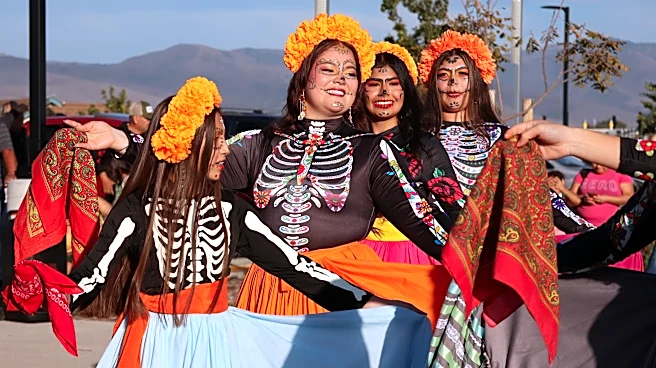
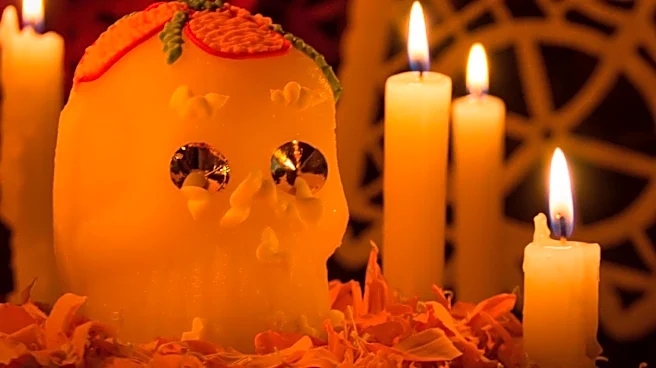
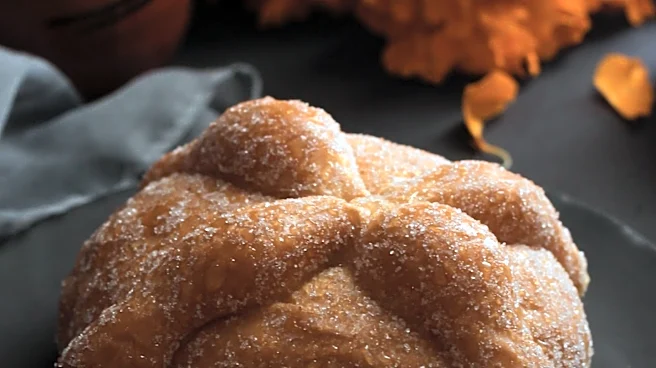
national identity and maintaining the country's historical memory. She shared images on her official social media channels showing young people working on the governmental altar, which she described as a space for reunion and respect. Her discourse highlighted the cultural significance of elements like the cempasúchil flower and candles, explaining that each component of the offering expresses affection for ancestors. President Sheinbaum stressed that this celebration is a direct legacy from indigenous peoples, reflecting a holistic Mexican view of death as an integral part of existence, contrasting with traditional Western perspectives that often avoid the topic. She also issued a direct call to young people and children to actively participate in setting up altars, deeming their involvement vital for Day of the Dead to continue as a tangible link between the past, present, and future of the nation.
Why It's Important?
President Sheinbaum's emphasis on preserving the Day of the Dead traditions underscores a broader national effort to reinforce cultural identity and historical memory. This initiative is significant as it aims to connect younger generations with their heritage, ensuring the continuity of practices that define Mexican culture. By promoting active participation, the government seeks to foster a sense of national unity and pride, rooted in shared customs and ancestral respect. This focus on cultural preservation can also have economic implications, as Day of the Dead is a major cultural event that attracts tourism and stimulates local economies through the sale of traditional goods, flowers, and food. Furthermore, in a globalized world, governmental support for indigenous traditions helps to safeguard unique cultural expressions from erosion, contributing to global cultural diversity. The message also subtly reinforces the administration's commitment to values that resonate with a significant portion of the population, potentially strengthening public support.
What's Next?
Following President Sheinbaum's call, it is expected that there will be increased public engagement in Day of the Dead celebrations in the coming years, particularly among younger demographics. Government-led cultural programs and educational initiatives might be implemented to further promote the understanding and practice of these traditions in schools and communities. Local municipalities and cultural institutions may receive additional support to organize events, workshops, and public altars, encouraging broader participation. The President's message could also inspire artists and cultural organizations to create new works that interpret and celebrate the Day of the Dead, further enriching its contemporary expression. Additionally, the emphasis on national identity through tradition may become a recurring theme in future public addresses and policy discussions, reinforcing the administration's cultural agenda and its connection to the country's indigenous roots.
Beyond the Headlines
The President's initiative to promote Day of the Dead traditions extends beyond mere cultural observance; it touches upon deeper themes of national identity, historical revisionism, and political messaging. By highlighting indigenous roots and a holistic view of death, the administration subtly positions itself as a guardian of authentic Mexican values, potentially contrasting with perceived Western influences. This cultural emphasis can serve as a unifying force, appealing to a broad spectrum of society and reinforcing a sense of collective belonging. Ethically, it raises questions about the role of the state in promoting cultural practices and the balance between preservation and organic evolution of traditions. Legally, it could lead to policies that protect cultural heritage sites or provide funding for traditional arts. Culturally, it reinforces a unique Mexican perspective on life and death, offering a counter-narrative to more secular or individualistic views prevalent elsewhere, and strengthening the country's distinct cultural footprint on the global stage.