



What's Happening?
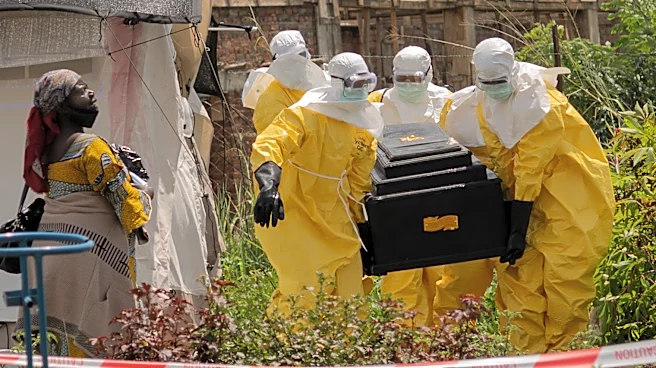
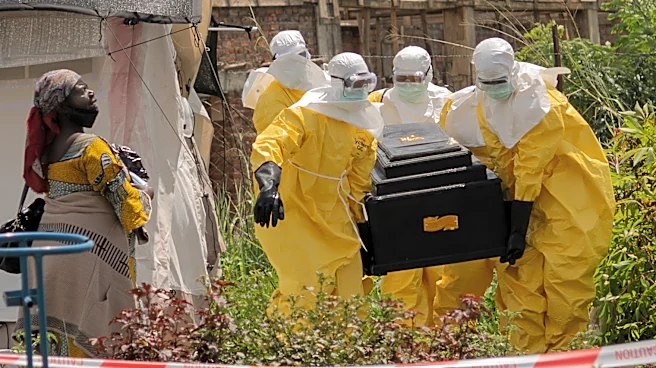
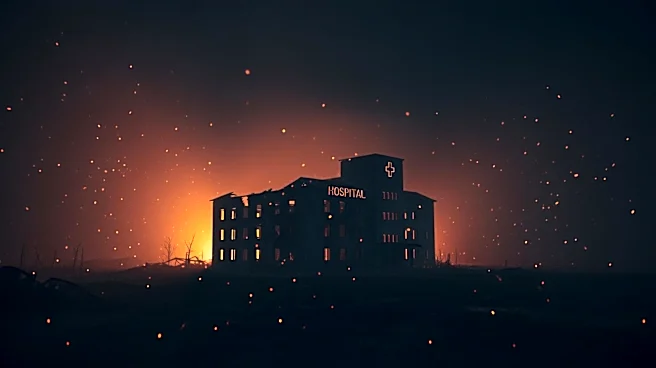
In the Democratic Republic of Congo's Ituri province, a hospital was set ablaze by protesters demanding access to the bodies of relatives who died from Ebola. The incident occurred in the town of Rwampara, where tensions have been high due to the handling
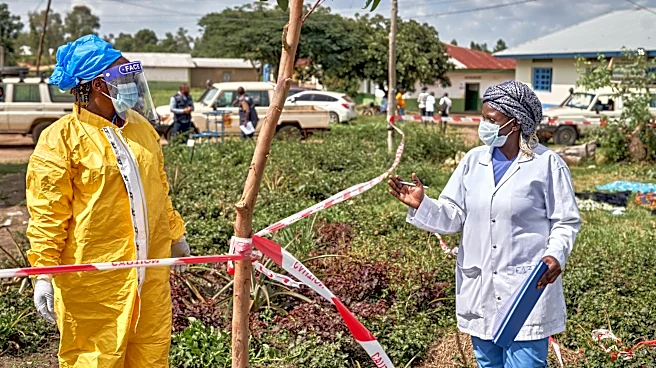
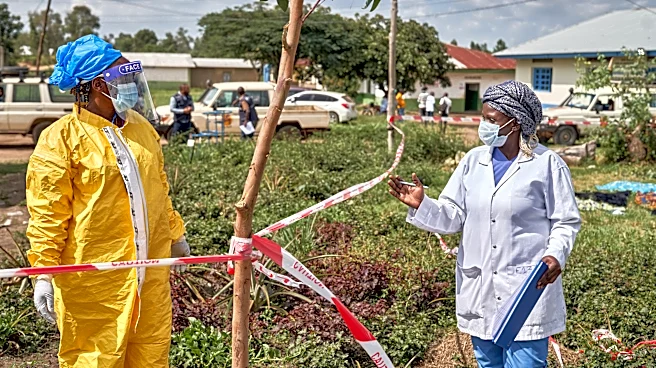
of Ebola victims. Protesters were reportedly denied the bodies for burial, leading to the violent outbreak. Security forces intervened to regain control of the hospital. This unrest coincides with the confirmation of the first Ebola case in South Kivu province, an area controlled by the M23 militia. The World Health Organization has declared the Ebola outbreak an international emergency, with 139 deaths and nearly 600 probable cases reported. The ongoing conflict in the region, including the presence of the M23 militia, complicates efforts to manage the outbreak effectively.
Why It's Important?
The situation in the DRC highlights the complex interplay between public health crises and regional conflicts. The inability to manage Ebola effectively due to ongoing violence poses a significant threat to public health and safety. The M23 militia's control over parts of the region adds another layer of difficulty, as they lack experience in handling such epidemics. The international community, including organizations like the WHO, faces challenges in providing aid and support in conflict zones. The unrest also underscores the importance of cultural practices, such as burial rites, in managing health crises. Failure to address these cultural aspects can lead to further violence and hinder disease control efforts.
What's Next?
The DRC government and international health organizations must navigate the dual challenges of managing the Ebola outbreak and addressing the underlying conflicts. Efforts to negotiate with local militias and communities may be necessary to ensure safe and effective health interventions. The international community may need to increase support and resources to the region to prevent further escalation of the health crisis. Monitoring the situation closely will be crucial to prevent the spread of Ebola to neighboring regions and countries.