
What's Happening?
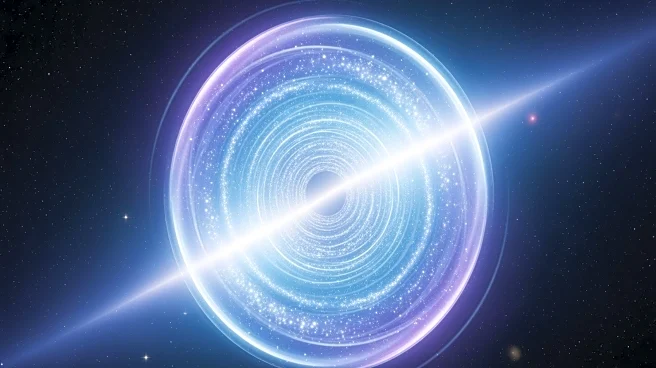
Astronomers have identified a 'cosmic interstellar channel' or tunnel that connects our solar system to distant stars. This discovery was made using data from the eRosita instrument, which revealed a channel of
hot, low-density plasma extending from our solar system toward distant constellations. The Local Hot Bubble, a region formed by ancient supernova explosions, is characterized by high temperatures and low density. The study, led by Dr. L. L. Sala from the Max Planck Institute, suggests that this channel may be part of a larger network of interstellar pathways connecting star-forming regions and pockets of heated gas.
Why It's Important?
The discovery of interstellar tunnels challenges previous assumptions about the structure of space around our solar system. These channels could influence the movement of cosmic rays, dust, and stellar winds, affecting the interstellar medium and potentially impacting the solar system's environment. Understanding these structures can provide insights into the history of supernova events and the dynamic processes shaping the Milky Way. This research enhances our knowledge of cosmic structures and may inform future studies on the evolution of galaxies and the distribution of matter in the universe.