







What's Happening?
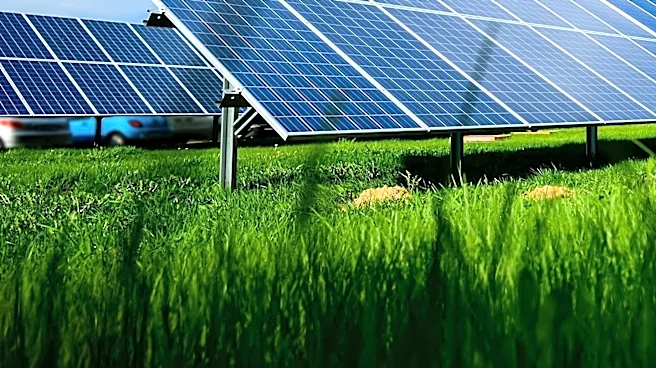
The City of Cleveland is advancing plans to install solar projects on two city-owned landfills, located off Kolthoff Drive and West 11th Street. These projects, with a combined capacity of 7-9 megawatts (MW), aim to transform underused land into sources
of locally generated clean energy. The 5-7 MW Kolthoff array will power operations at Cleveland Hopkins International Airport (CLE), while the 2 MW West 11th array will supply electricity to Cleveland Public Power (CPP) customers, with cost savings passed on to them. Mayor Justin M. Bibb emphasized that these projects prioritize energy affordability for residents and leverage underused land for clean energy generation. The initiative is part of a broader regional clean energy effort funded by a $129 million grant from the U.S. Environmental Protection Agency’s (EPA) Climate Pollution Reduction Grants (CPRG) program, awarded in 2024 to a coalition including Cuyahoga County, the City of Cleveland, and the City of Painesville.
Why It's Important?
This initiative is significant for Cleveland's energy future and environmental goals. By utilizing former landfills for solar energy, the city is repurposing blighted or difficult-to-develop properties, demonstrating an innovative approach to land use and urban renewal. The projects are expected to provide tangible financial cost savings for Cleveland residents and Cleveland Public Power customers, addressing energy affordability in a volatile market. Furthermore, these solar installations contribute to Cleveland's commitment to reducing greenhouse gas emissions (GHGs) and achieving net-zero emissions by 2050, aligning with its 2018 pledge for 100% clean, renewable energy by that year. The broader EPA grant also supports workforce development in clean energy career pathways, fostering economic growth and job creation in the region. The integration of pollinator-friendly plants around the solar panels also highlights an ecological benefit, promoting biodiversity and natural restoration.
What's Next?
The projects are currently in the design stage, with a design-build team led by Enerlogics Networks, Inc., in collaboration with Energy Independent Solutions, LLC, and Prairie Wind Group, LLC. Following the design phase, construction will commence to transform the landfills into solar farms. The broader regional clean energy initiative, supported by the EPA grant, is expected to develop approximately 53 MW of solar power, natural restoration projects, and a 20 MW battery installation associated with the closure of a coal-powered facility in Painesville. These developments will continue to reduce greenhouse gas emissions and expand locally generated renewable energy throughout Northeast Ohio. The city will likely monitor the progress of these projects and assess their impact on energy costs and environmental targets, potentially serving as a model for other urban areas seeking to repurpose land for clean energy.
Beyond the Headlines
Beyond the immediate benefits of clean energy and cost savings, Cleveland's landfill solar projects represent a deeper shift in urban planning and environmental stewardship. The transformation of former waste sites into productive energy assets challenges traditional perceptions of land use and highlights the potential for circular economy principles in municipal development. This approach not only addresses climate change but also tackles issues of environmental justice by cleaning up and repurposing historically neglected areas. The inclusion of pollinator-friendly plants beneath the solar panels signifies an integrated ecological design, demonstrating that renewable energy development can coexist with and even enhance local ecosystems. This holistic strategy could inspire other cities to explore similar multi-benefit projects, fostering a more sustainable and resilient urban landscape that prioritizes both human well-being and ecological health.