









What's Happening?
Aaron Reitz, a former official in the Trump administration and a prominent lawyer in Texas, has been appointed as the new US Attorney for the Southern District of Texas. This appointment follows the confirmation of the current acting US Attorney, John
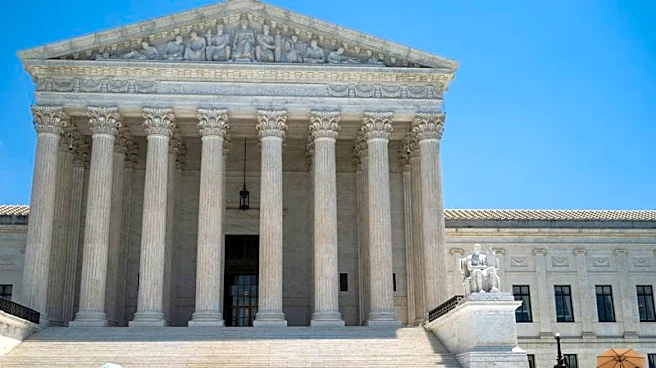
Marck, as a federal judge in McAllen, Texas. The Southern District, which includes Houston and a significant portion of the state's southern border, will now be under Reitz's leadership. The district's judges have voted to appoint Reitz, allowing him to serve without the need for Senate confirmation. Reitz has a notable background, having served as a deputy in the Texas Attorney General's office and played a key role in litigation against the Biden administration. He also worked on Attorney General Ken Paxton's attempt to challenge the 2020 presidential election results at the US Supreme Court.
Why It's Important?
The appointment of Aaron Reitz as the US Attorney for the Southern District of Texas is significant due to the district's strategic importance, covering a large area along the US-Mexico border. Reitz's background in litigation against the Biden administration and his previous roles in the Trump administration suggest a continuation of conservative legal strategies in the district. His leadership could influence the district's approach to federal cases, particularly those involving immigration and border security. This appointment also reflects the ongoing influence of former President Trump's administration in shaping the federal judiciary and legal landscape, as Reitz has been a prominent figure in conservative legal circles.
What's Next?
With Reitz's appointment, the Southern District of Texas may see a shift in its legal priorities, potentially focusing more on issues aligned with conservative policies. Stakeholders, including political leaders and civil society groups, may respond to this appointment with varying degrees of support or opposition, depending on their stance on border security and immigration policies. Reitz's leadership could also impact ongoing and future litigation involving the federal government, particularly in cases that challenge the current administration's policies.