


What's Happening?
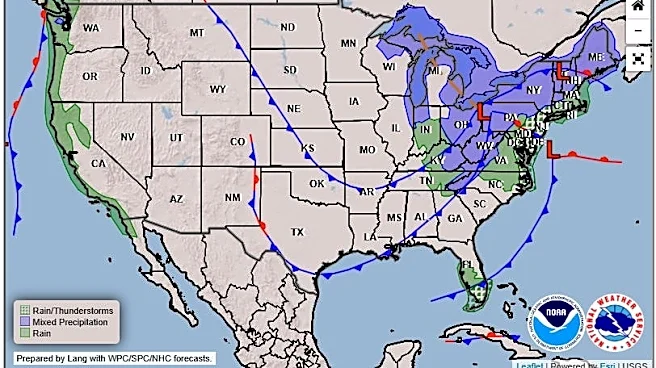
A significant storm system is projected to impact the Midwest and parts of the Northeast, bringing a mix of rain, snow, and a substantial drop in temperatures. The low-pressure system is developing across the Midwest and is expected to strengthen as it
moves eastward, creating blustery and sloppy conditions. While the exact precipitation amounts remain uncertain, temperatures are forecast to fall below freezing in some Midwest areas, with highs generally in the 30s and 40s. This weather event is part of a larger front that will also bring colder air to the Southeast, including South Florida. The storm's progression involves a low-pressure area forming over the Carolinas, which could further develop off the Mid-Atlantic coast by Thursday and track northward through the weekend. Simultaneously, a separate low-pressure system originating in the Midwest will move east, contributing to the widespread precipitation and temperature changes across the affected regions.
Why It's Important?
This weather event carries several implications for the affected regions. The combination of rain and potential snow, coupled with freezing temperatures, could lead to hazardous travel conditions, impacting daily commutes and transportation logistics across the Midwest and Northeast. For agriculture, particularly in the Midwest, the sudden drop in temperatures could pose risks to any late-season crops still in fields or recently harvested produce that is not adequately protected. The uncertainty in precipitation type and amount means that communities need to prepare for both potential heavy rainfall, which could lead to localized flooding, and significant snowfall, which could strain infrastructure and emergency services. Businesses reliant on outdoor operations or transportation may experience disruptions, potentially affecting supply chains and local economies. Residents will need to take precautions against the cold, including ensuring adequate heating and preparing for potential power outages, especially if heavy wet snow accumulates.
What's Next?
Residents in the Midwest and Northeast should closely monitor local weather forecasts for updates on the storm's trajectory and intensity, as precipitation types and amounts could shift. Emergency services and local authorities will likely issue advisories regarding travel conditions and safety precautions. Transportation departments will be preparing for potential road treatments and snow removal operations. Individuals should prepare for colder temperatures by securing outdoor items, checking heating systems, and having emergency supplies on hand. Farmers in the affected areas will need to assess any remaining crops and take protective measures against freezing temperatures. The progression of the storm through the weekend will determine the full extent of its impact, with potential for lingering cold air and icy conditions even after the main precipitation has passed. The event will serve as an early test for winter preparedness in many communities.
Beyond the Headlines
The anticipated storm highlights the broader challenges of weather variability and its impact on daily life and regional economies. Such events underscore the importance of robust infrastructure capable of withstanding diverse weather conditions, from heavy rain to significant snowfall. For urban centers, managing snow and ice can be a costly and complex undertaking, affecting public services and economic activity. In rural areas, particularly those with agricultural reliance, unpredictable weather patterns can introduce significant financial risks for farmers already contending with fluctuating market prices and input costs. The need for accurate and timely weather forecasting becomes paramount, enabling individuals and institutions to make informed decisions that mitigate potential disruptions and ensure public safety. This event also serves as a reminder of the interconnectedness of weather systems, as a front originating in the Midwest can influence conditions across a wide swath of the country, from the Northeast to the Southeast.