





What's Happening?
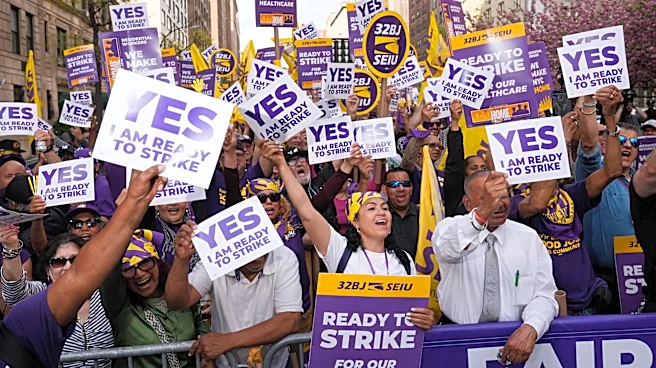
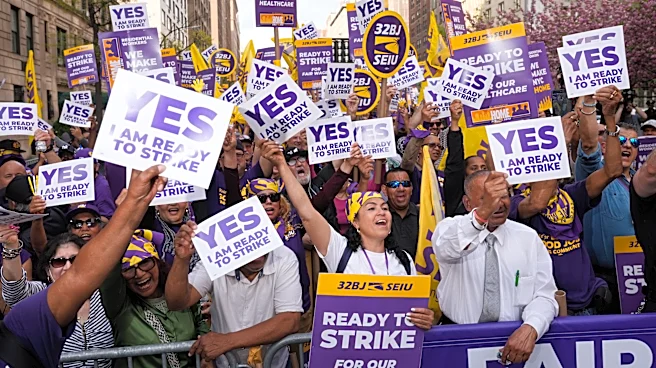
Union leaders representing thousands of New York City apartment building workers, including doorpersons and superintendents, have reached a tentative contract agreement with building owners, averting a potential strike. The agreement comes just days before
the expiration of the current contract, which covers nearly 34,000 workers. The union, 32BJ SEIU, had not called a strike in 35 years, and the possibility of a strike had prompted tenants and building owners to prepare for disruptions in services such as trash collection and building maintenance. Specific details of the agreement have not been disclosed, but it will be presented to union members for a vote. The negotiations had been tense, with the union opposing proposals for employees to pay health insurance premiums and the creation of a lower-paid job classification for future hires.
Why It's Important?
The agreement is significant as it prevents a strike that could have affected the daily lives of approximately 1.5 million residents in New York City. The workers sought to improve wages and pensions, highlighting the difficulty of living in the New York area on current salaries. The union's ability to negotiate a tentative agreement without resorting to a strike demonstrates the power of organized labor in advocating for worker rights and benefits. The outcome also reflects the broader economic pressures faced by both workers and building owners, with rising rents and costs impacting negotiations. The potential rent freeze on rent-stabilized apartments, supported by Mayor Zohran Mamdani, adds another layer of complexity to the economic landscape affecting both parties.
What's Next?
The tentative contract agreement will be put to a vote by union members, determining whether the terms are acceptable to the workforce. If approved, the agreement will solidify the terms of employment for the next contract period. The outcome of the vote will also influence future negotiations and labor relations in the city. Building owners and the Realty Advisory Board on Labor Relations will need to address the concerns raised by the union, particularly regarding wages and job classifications, to ensure continued cooperation and avoid future disputes.
Beyond the Headlines
The situation highlights the ongoing challenges in balancing worker rights with economic realities in urban environments. The negotiations underscore the importance of addressing healthcare costs and job security in labor agreements. The potential strike and its resolution may influence other labor negotiations in the city, setting precedents for how similar disputes are handled. The involvement of political figures like Mayor Mamdani indicates the intersection of labor issues with broader political agendas, particularly in advocating for rent control measures.