



What's Happening?
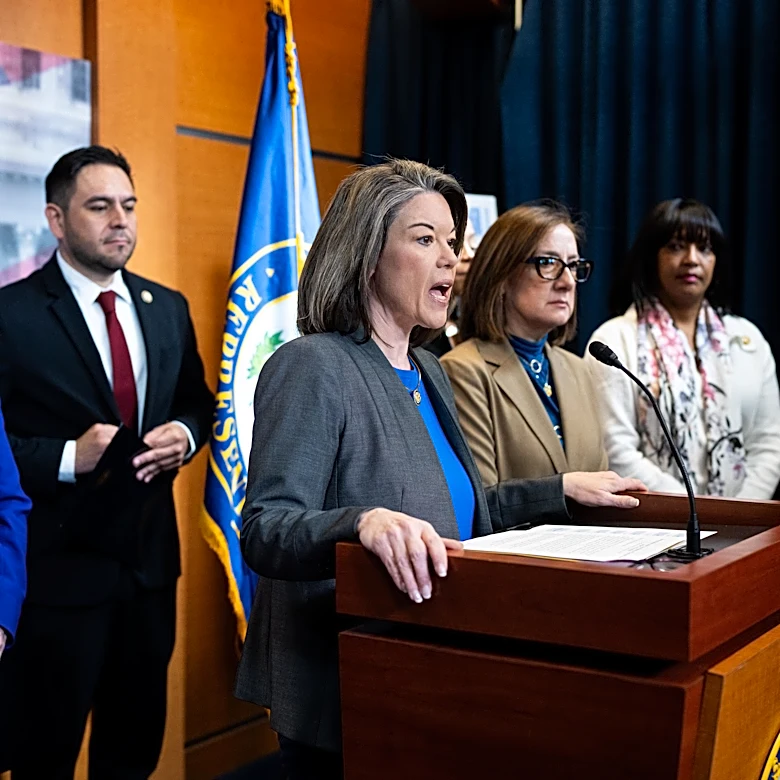
Representative Laura Gillen (NY-04) announced her vote in favor of the Major Richard Star Act, which recently passed in the U.S. House of Representatives. In a statement released on November 12, 2026, Congresswoman Gillen expressed her pride in co-sponsoring
the bipartisan legislation. She emphasized that the bill aims to fulfill the nation's commitment to veterans by providing full retirement and disability benefits to eligible wounded service members. Gillen highlighted the importance of strengthening the benefits owed to veterans and ensuring they receive the support they have earned through their sacrifice. Her statement underscores a commitment to veteran welfare and bipartisan cooperation on issues affecting military personnel.
Why It's Important?
The passage of the Major Richard Star Act, supported by Representative Gillen, is significant for thousands of wounded veterans across the United States. This legislation addresses a long-standing issue where certain disabled veterans have had their retirement pay offset by their disability compensation, effectively reducing their overall benefits. By ensuring full retirement and disability benefits, the act aims to provide financial security and recognition for veterans who sustained injuries during their service. This move could alleviate financial burdens for many military families and reinforce the principle that veterans should not be penalized for their service-connected disabilities. The bipartisan nature of the bill also signals a broad consensus in Congress regarding the importance of supporting the veteran community, potentially paving the way for future collaborative efforts on veteran affairs.
What's Next?
Following its passage in the House, the Major Richard Star Act will proceed to the Senate for consideration. If approved by the Senate, it will then be sent to the President for signature to become law. Should the bill be enacted, eligible veterans would begin to receive the full retirement and disability benefits outlined in the legislation. This would necessitate administrative adjustments within relevant government agencies, such as the Department of Veterans Affairs and the Department of Defense, to implement the new benefit structure. Advocacy groups for veterans will likely continue to monitor the bill's progress and its subsequent implementation to ensure that the intended benefits reach those who qualify without undue delay or bureaucratic hurdles.
Beyond the Headlines
The Major Richard Star Act's passage reflects a broader societal and political recognition of the sacrifices made by military personnel, particularly those who return with service-connected disabilities. Beyond the immediate financial relief, this legislation carries significant symbolic weight, affirming the nation's moral obligation to its veterans. It also highlights the ongoing efforts to address gaps in veteran support systems and to ensure that policies adequately reflect the needs of those who have served. The bipartisan support for this act could also set a precedent for future legislative initiatives aimed at improving veteran welfare, potentially fostering a more comprehensive approach to veteran care, benefits, and reintegration into civilian life.