
What's Happening?
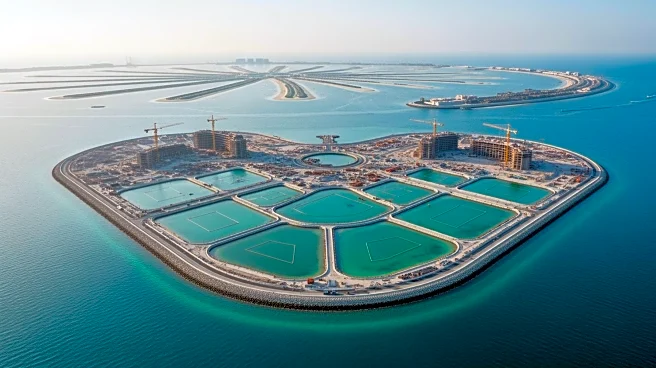
Ocean Flower Island, a $12 billion man-made island project by Evergrande in China, is struggling to fulfill its ambitious vision. Initially designed to host 200,000 residents and numerous commercial attractions,
the island now stands largely vacant. The project, modeled after Dubai's Palm Jumeirah, has become a symbol of China's real estate downturn. Evergrande's financial collapse in 2021, due to over $300 billion in debt, has left the island with empty hotels, a non-operational theme park, and unfinished apartment towers. Local authorities are attempting to salvage the project by marketing it as a unique lifestyle concept, primarily attracting retirees.
Why It's Important?
The challenges faced by Ocean Flower Island reflect broader issues in China's real estate market, which has seen a significant decline in new home sales. The project's failure highlights the risks associated with large-scale real estate developments and the impact of financial mismanagement. The situation underscores the need for sustainable development practices and raises questions about the future of similar projects in China. The island's struggles also illustrate the potential economic consequences for investors and local governments involved in such ventures.
What's Next?
Local authorities in Danzhou are working to attract more residents to Ocean Flower Island, focusing on retirees as a target demographic. With China's aging population expected to grow significantly, there is hope that the island can eventually become a successful retirement destination. However, the project's future remains uncertain, and its success will depend on the ability to overcome current challenges and adapt to changing market conditions. The situation will be closely monitored by investors and policymakers as a case study in real estate development and economic recovery.