








What's Happening?
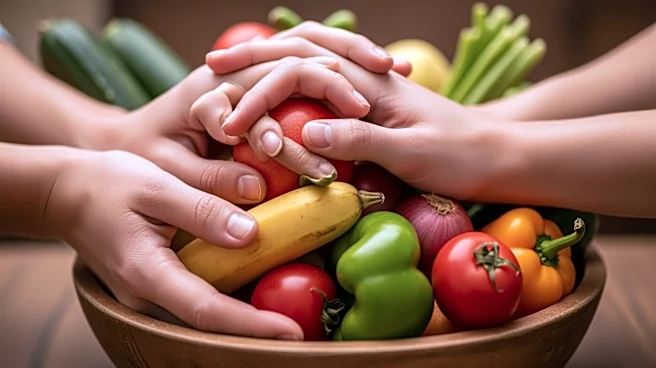
Food justice advocates are highlighting the interconnectedness of food and medicine, challenging the dominant narrative that separates the two. Many communities, particularly those from cultures that do not distinguish between food and medicine, are advocating
for equitable access to fresh, nutritious food across social, racial, and economic lines. However, government institutions and philanthropic foundations often impose regulations that prevent communities from choosing what food they want to grow, eat, or distribute, maintaining colonial binaries between food and medicine. Ayni Herb Farm in Hudson Valley, New York, exemplifies efforts to bridge this gap by growing medicinal herbs that support both ecological health and community health needs. The farm engages in mutual aid initiatives to distribute these herbs, fostering political education and collective care.
Why It's Important?
The fragmentation of the food system has significant implications for public health and social equity. By maintaining a separation between food and medicine, existing policies fail to address the holistic needs of communities, particularly marginalized groups such as queer, trans, Black, Indigenous, immigrant, and disabled individuals. The COVID-19 pandemic has exacerbated these disparities, highlighting the need for a pandemic solidarity framework that prioritizes accessibility and collective care. The failure to integrate food and medicine in policy decisions perpetuates systemic inequities and undermines efforts to create a sustainable and equitable food system. Advocates argue that recognizing the interconnectedness of food and medicine is crucial for addressing health disparities and fostering community resilience.
What's Next?
Advocates are calling for a shift towards systems of care that prioritize community needs and collective safety. This includes rejecting profit-driven public health guidelines and embracing pandemic solidarity initiatives that promote COVID safety for all. The ongoing campaign by the New York Immigration Coalition urges Governor Hochul to support legislation that protects immigrant communities from ICE, highlighting the need for policies that prevent collaboration between local law enforcement and federal immigration agencies. As anti-masking bills threaten public health and safety, advocates emphasize the importance of using well-fitting respirators or masks to combat state surveillance and COVID denialism. The future of food justice is seen as directly tied to the expansion of local and regional solidarity economies.
Beyond the Headlines
The broader implications of food justice initiatives extend beyond immediate health and safety concerns. By fostering local and regional solidarity economies, communities can gain greater control over their food systems and larger systems of care. This approach challenges the capitalist economies that prioritize profit over human life and promotes a culture of collective care and safety. The rise of anti-masking bills and ICE-led detentions underscores the need for vigilance and community-driven safety measures. Advocates argue that the expansion of solidarity economies can reshape not only the food system but also the broader social and political landscape, promoting liberation and equity for all people.