






What's Happening?
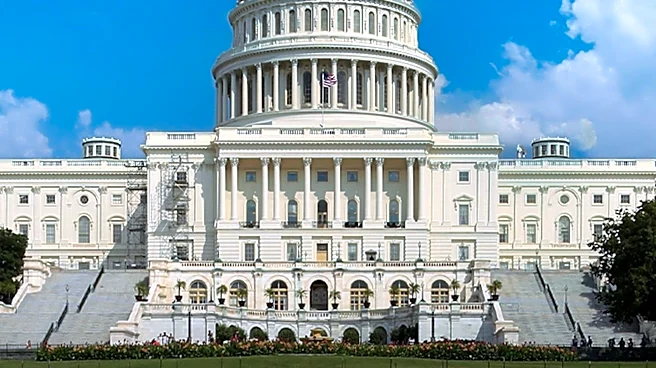
U.S. Representatives Nick Langworthy, R-23, and Kim Schrier, D-08, have introduced the Fair Licensing for Operations of Water Structures (FLOWS) Act. This bipartisan legislation aims to modernize the federal permitting process for hydropower projects
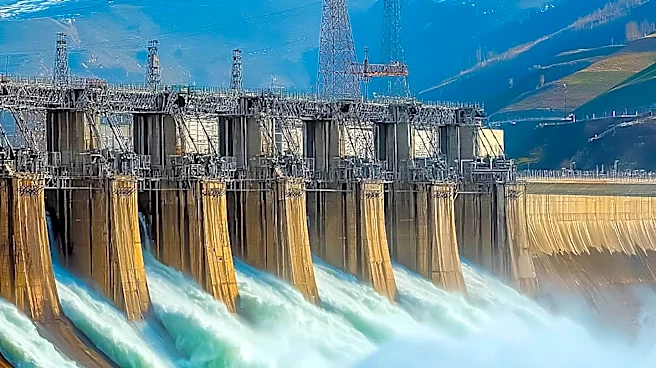
by eliminating unnecessary regulatory burdens and streamlining approvals for routine maintenance. The act seeks to support the next generation of American water energy technologies by reducing delays and costs associated with outdated federal regulations. The FLOWS Act would exempt routine maintenance and non-substantial alterations at existing hydropower facilities from requiring prior Federal Energy Regulatory Commission (FERC) approval, while preserving environmental protections and dam safety oversight.
Why It's Important?
The FLOWS Act is crucial for maintaining and enhancing the role of hydropower as a reliable and affordable source of renewable energy in the United States. By streamlining the permitting process, the legislation aims to lower energy costs, improve grid reliability, and support innovation in clean energy technologies. This is particularly significant as the country seeks to transition to more sustainable energy sources and reduce greenhouse gas emissions. The act also addresses the challenges faced by hydropower operators due to outdated regulations, which can lead to increased costs and delays in necessary maintenance and upgrades. By modernizing these processes, the FLOWS Act could enhance the efficiency and sustainability of the nation's energy infrastructure.
What's Next?
The FLOWS Act will need to pass through both the House and Senate before becoming law. The Senate companion legislation has already advanced through the Senate Energy and Natural Resources Committee, indicating some level of bipartisan support. If enacted, the legislation will require hydropower operators to adapt to new regulatory frameworks, potentially leading to increased investment in maintenance and modernization projects. The act could also encourage further legislative efforts to streamline regulatory processes in other areas of renewable energy, contributing to the broader goal of achieving energy independence and sustainability.