


What's Happening?
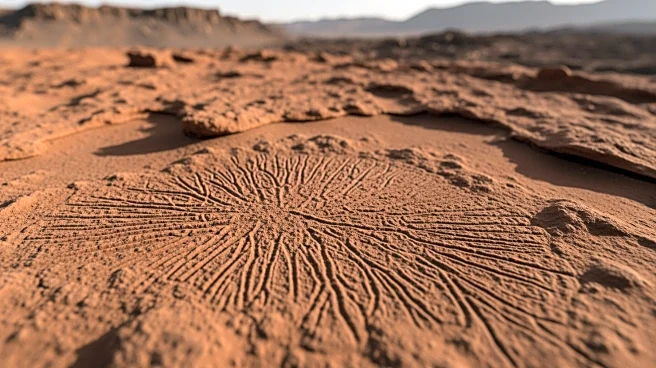
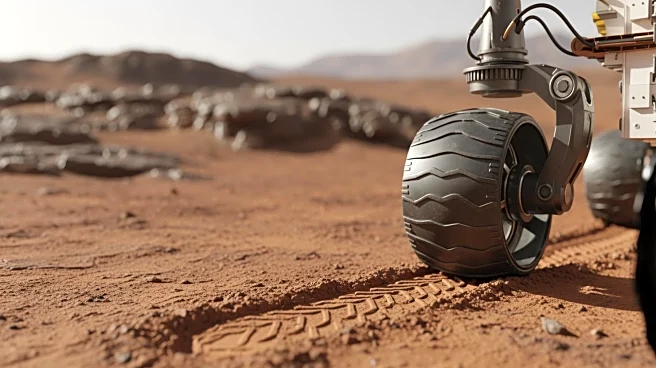
NASA's Curiosity Rover has been investigating unique geological formations on Mount Sharp, Mars, known as 'spiderwebs.' These formations are part of a sulfate-rich layer that indicates the presence of water in Mars' past. The rover's exploration has revealed
that these formations are characterized by central fractures where groundwater once seeped, allowing minerals to concentrate. Curiosity's findings include nodules, indicative of past groundwater, and the presence of clay and carbonate minerals, which provide clues about the planet's ancient climate.
Why It's Important?
The discovery of these formations and their characteristics offers valuable insights into Mars' geological history and the planet's potential to have supported life. The presence of water-related minerals suggests that liquid water, a key ingredient for life, may have persisted on Mars longer than previously thought. This enhances our understanding of Mars' climate evolution and its habitability. The findings also contribute to the broader goals of NASA's Mars Exploration Program, which aims to uncover the planet's past environments and assess its potential for life.
What's Next?
Curiosity will continue its ascent of Mount Sharp, exploring the sulfate layer for additional miles. The mission aims to gather more data on how Mars' climate changed over billions of years. The rover's ongoing analysis of rock samples will further elucidate the planet's geological and climatic history. These efforts are part of a larger strategy to prepare for future missions that may include human exploration of Mars.