






What's Happening?
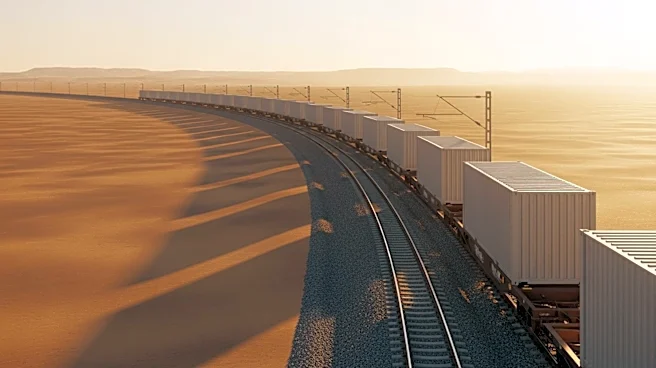
Turkey, Syria, and Jordan are collaborating on a regional rail corridor project aimed at linking Europe to the Gulf. This initiative is part of Turkey's broader strategy to establish alternative trade routes amidst disruptions in traditional maritime
and overland networks. The proposed rail network will run from Europe through Turkey, across Syria, and into Jordan, creating a continuous land bridge between Mediterranean ports and Gulf markets. This development follows a trilateral memorandum of understanding signed to upgrade and reconnect rail infrastructure across these countries. The project positions Turkey as a central transit hub, capitalizing on global instability to redirect commerce through its territory. Syria's geographic location is crucial, serving as the link between Turkey and Jordan, while Jordan provides access to the Arabian Peninsula. The corridor is expected to eventually connect to Gulf rail systems, including Saudi Arabia's network.
Why It's Important?
The rail corridor project is significant as it offers an alternative to congested or vulnerable shipping lanes like the Suez Canal, potentially reducing transit times and strengthening regional economic integration. By positioning itself as a central transit hub, Turkey aims to enhance its geopolitical influence and economic stability. The project also reflects a strategic shift in trade routes due to geopolitical tensions affecting traditional pathways through Russia, Iran, and key maritime chokepoints. For Syria and Jordan, the corridor could boost economic opportunities by facilitating trade and connectivity with Europe and the Gulf. However, challenges such as damaged infrastructure in Syria and political and security risks along the route remain significant hurdles.
What's Next?
The next steps involve addressing the infrastructural and political challenges that could impede the project's progress. Stakeholders will need to ensure the security and stability of the corridor, particularly in conflict-affected areas like Syria. Additionally, the successful integration of this rail network with existing Gulf rail systems will be crucial for maximizing its economic potential. Regional cooperation and investment will be key to overcoming these challenges and realizing the project's full benefits.
Beyond the Headlines
The rail corridor project could have deeper implications for regional geopolitics, potentially altering trade dynamics and alliances. By reducing reliance on traditional maritime routes, the corridor may shift economic power balances and influence future trade negotiations. The project also highlights the importance of infrastructure development in fostering economic resilience and integration in politically volatile regions.