

What's Happening?
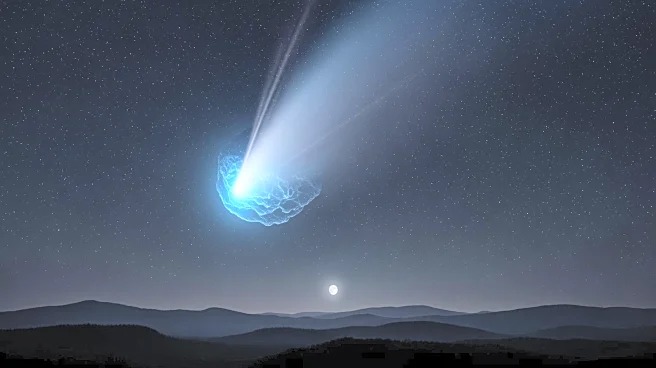
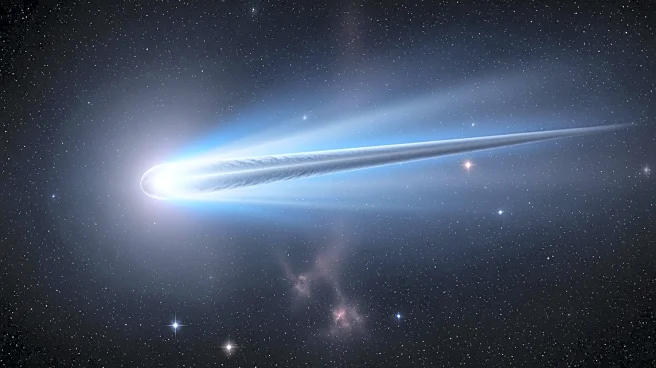
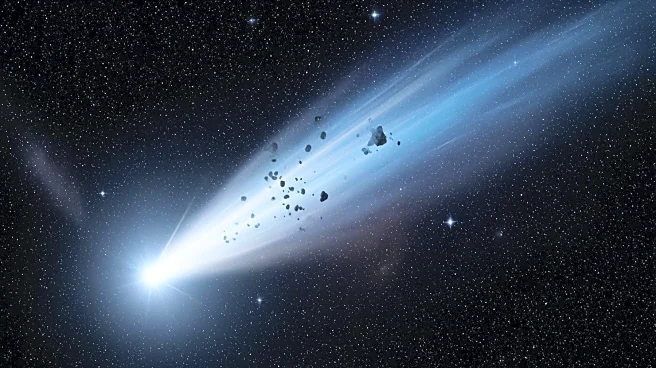
The interstellar comet 3I/ATLAS is set to make its closest approach to Earth on December 19, 2025. Discovered in July by the Deep Random Survey remote telescope in Chile, this comet is the third known interstellar object to enter our solar system. It
is traveling at approximately 137,000 miles per hour and will pass within 167 million miles of Earth. The comet, which has a solid, icy nucleus surrounded by a coma of gas and dust, is rich in carbon dioxide and emits cyanide gas and atomic nickel vapor. These characteristics provide astronomers with valuable insights into the chemistry of materials from beyond our solar system. The comet's approach offers a unique opportunity for astronomers to study its composition and trajectory, which could shed light on planet formation in exoplanetary systems.
Why It's Important?
The close approach of 3I/ATLAS presents a rare opportunity for scientific study, as interstellar objects are infrequent visitors to our solar system. Understanding the composition and behavior of such comets can provide insights into the processes that govern planet formation in other star systems. This knowledge is crucial for comparative studies between our solar system and others, potentially revealing similarities and differences in planetary development. Additionally, the comet's approach has sparked public interest and speculation, highlighting the importance of scientific communication in dispelling myths and providing accurate information about celestial events.
What's Next?
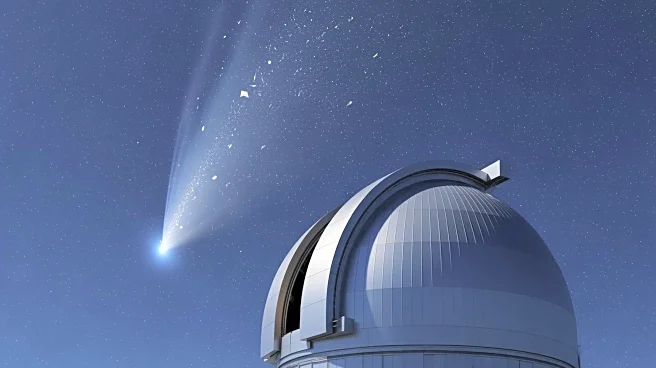
As 3I/ATLAS approaches its closest point to Earth, astronomers and enthusiasts are preparing to observe the comet using powerful amateur telescopes. The Virtual Telescope Project plans to host a free livestream of the event, allowing a global audience to witness the comet's passage. This event underscores the importance of international collaboration in astronomical research and public engagement. The data collected during this period will be analyzed to enhance our understanding of interstellar objects and their role in the broader cosmic landscape.