






What's Happening?
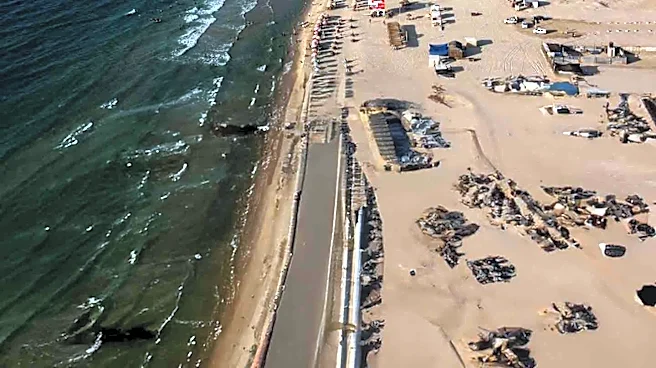
Ocean City has initiated a significant beach replenishment project, leading to the temporary closure of certain sections of the coastline. This multi-million dollar endeavor aims to build up the coastline to combat erosion and protect the area from future
storm damage. The project involves the addition of sand to the beaches, a common practice in coastal management to maintain beach width and stability. The closures are necessary to ensure the safety of the public and the workers involved in the project. The initiative is part of a broader effort to preserve the natural beauty and economic viability of Ocean City, which relies heavily on tourism.
Why It's Important?
The beach replenishment project in Ocean City is crucial for several reasons. Firstly, it addresses the ongoing issue of coastal erosion, which poses a threat to both the environment and the local economy. By reinforcing the beaches, the project helps protect infrastructure and properties from storm surges and rising sea levels. Additionally, maintaining wide and attractive beaches is vital for tourism, a significant economic driver for Ocean City. The project also reflects broader environmental management strategies being employed along the U.S. East Coast, where many communities face similar challenges. The success of such projects can serve as a model for other coastal areas dealing with erosion and climate change impacts.
What's Next?
As the project progresses, local authorities will continue to monitor its impact on the environment and the community. Once the replenishment is complete, the closed sections of the beach will be reopened to the public. The project is expected to enhance the resilience of Ocean City's coastline, making it better equipped to handle future weather events. Stakeholders, including local businesses and environmental groups, will likely assess the project's effectiveness in achieving its goals. Continued investment in coastal management and adaptation strategies will be essential as climate change continues to affect coastal regions.