





What's Happening?
Iran has formally stated that the U.S. bears full international responsibility for damages resulting from its unilateral sanctions and must provide complete compensation, including restitution and reparations. Foreign Minister Abbas Araghchi conveyed
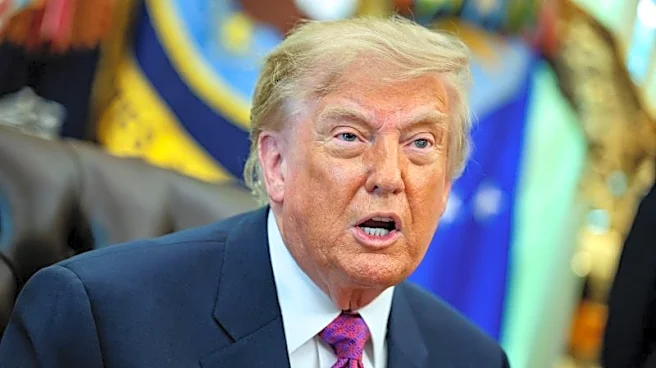
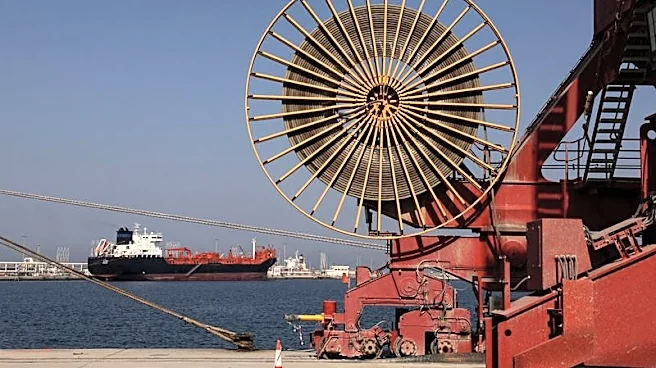
this message to the UN and the Security Council, characterizing the U.S. measures as an 'economic terrorism campaign' that is unlawful under international law. Araghchi asserted that the U.S. campaign carries international responsibility, obligating it to compensate for all material and moral damages. He also indicated that the U.S. could face individual criminal responsibility if legal elements are established for the harm inflicted on the Iranian populace. Iran reserves the right to pursue accountability and redress through all available means. This comes after President Trump's administration launched 'Operation Economic Outcast,' a sanctions campaign targeting key Iranian economic sectors, including aviation, shipping, gold, technology, and digital assets, blacklisting over 60 entities, individuals, and vessels.
Why It's Important?
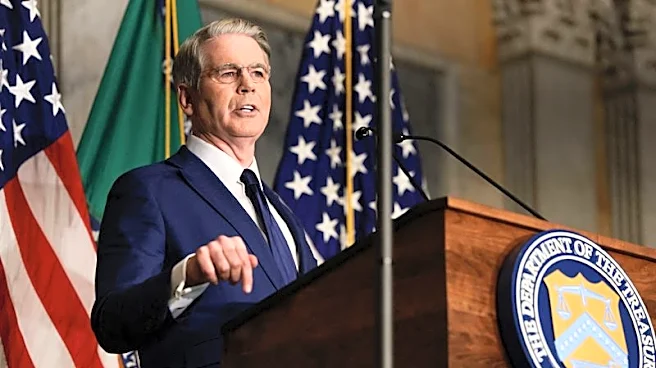
This development highlights the escalating tensions between the U.S. and Iran, with significant implications for international law and global economic stability. Iran's demand for compensation challenges the legitimacy of unilateral sanctions and could set a precedent for other nations affected by similar measures. If Iran successfully pursues accountability, it could reshape the framework for international sanctions, potentially limiting the ability of powerful nations to impose such penalties without broader international consensus. The U.S. policy, described as 'economic asphyxiation' by Treasury Secretary Scott Bessent, aims to sever Iran's economic lifelines, which could lead to severe humanitarian consequences and further destabilize the Middle East. The call for the UN Security Council to reject these measures underscores a broader international debate on the legality and ethics of secondary sanctions, which pressure third countries to comply with U.S. foreign policy objectives.
What's Next?
Iran is expected to continue its efforts to rally international support against U.S. sanctions, urging the UN Security Council and member states to condemn and reject Washington’s unilateral coercive measures. Foreign Minister Araghchi has called on countries not to recognize or implement policies that link their sovereign rights to U.S.-determined policies. He has also urged the U.S. to cease threats and coercive actions aimed at forcing third countries to alter legitimate economic relations with Iran. Additionally, Araghchi has requested UN Secretary-General Antonio Guterres to assess and report on the humanitarian and human rights impacts of these sanctions, particularly concerning access to essential goods and services for civilians. The independent assessment and documentation of relevant evidence will be crucial for Iran's future legal actions, as it seeks to hold perpetrators accountable and secure compensation.
Beyond the Headlines
The Iranian demand for compensation extends beyond immediate economic concerns, touching upon fundamental principles of international sovereignty and the rule of law. By labeling U.S. sanctions as 'economic terrorism,' Iran is attempting to reframe the narrative and challenge the moral authority of the U.S. on the global stage. This move could galvanize other nations that feel similarly impacted by unilateral sanctions, potentially leading to a more coordinated international pushback against such policies. The long-term implications could include a re-evaluation of the scope and enforceability of international sanctions, prompting discussions on whether such measures should require broader multilateral approval to be considered legitimate. Furthermore, the focus on individual criminal responsibility for the consequences of these actions introduces a new dimension to the debate, suggesting a potential shift towards holding policymakers accountable for the humanitarian impact of economic warfare.