







What's Happening?
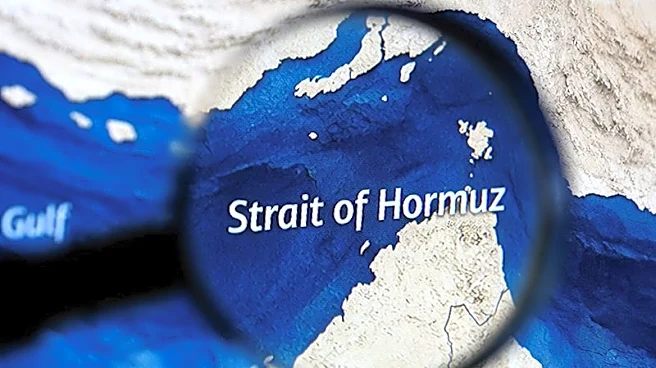
The U.S. extension of the ceasefire with Iran has not resolved the ongoing disruptions in oil and gas flows through the Strait of Hormuz. Barclays has warned that the scale of disruption is significantly underpriced in both oil futures and energy equities.
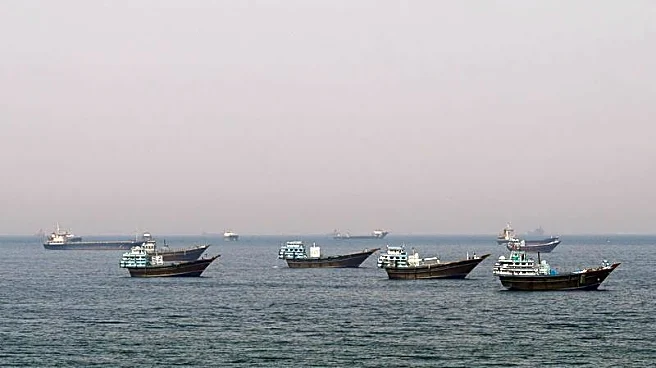
The Strait has been closed to oil and gas flows for over 50 days, with more than 600 million barrels blocked and over 10 million barrels per day shut in. The continued U.S. blockade of Iranian ports has left physical markets tight, with limited passage allowed from the Iranian side. An estimated 20,000 seafarers remain stranded on vessels in the Persian Gulf, facing security threats. A container ship was reportedly fired upon by an Iranian Revolutionary Guard Corps gunboat, sustaining heavy damage.
Why It's Important?
The ongoing disruptions in the Strait of Hormuz have significant implications for global oil markets and energy security. The Strait is a critical chokepoint for global oil supplies, and prolonged disruptions can lead to increased volatility in oil prices. Barclays' warning about the underpricing of these disruptions suggests that markets may not be fully accounting for the potential impact on oil supply and prices. This situation could lead to higher oil prices in the coming months, affecting energy costs for consumers and businesses. The geopolitical tensions in the region also highlight the vulnerability of global energy supply chains to political and military conflicts, underscoring the need for diversified energy sources and routes.
What's Next?
As the situation in the Strait of Hormuz remains unresolved, stakeholders will need to monitor developments closely. The U.S. and Iran may engage in further negotiations to address the blockade and restore oil flows. Meanwhile, energy companies and investors may need to reassess their strategies in light of potential price increases and supply disruptions. The situation could also prompt discussions on alternative energy routes and sources to mitigate the impact of geopolitical tensions on global energy markets. Additionally, the international community may need to consider diplomatic efforts to ensure safe passage through the Strait and prevent further escalation of tensions.