
What's Happening?
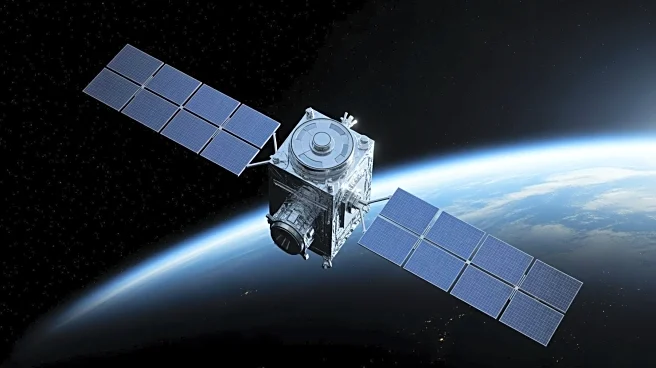
Rocket Lab successfully launched a South Korean disaster-monitoring satellite from New Zealand on January 29, 2026. The mission, named 'Bridging the Swarm,' was initially scheduled for December 2025 but
faced delays due to additional checkouts and a last-second abort during the first attempt. The Electron rocket, standing 59 feet tall, carried the NEONSAT-1A satellite, which is equipped with a high-resolution optical camera designed for near-real-time natural disaster monitoring of the Korean peninsula. The satellite is part of a program led by the Satellite Technology Research Center at the Korea Advanced Institute of Science and Technology (KAIST), funded by the Korean Ministry of Science and ICT. The successful deployment of NEONSAT-1A marks Rocket Lab's second launch of 2026 and its 81st overall.
Why It's Important?
The successful launch of NEONSAT-1A is significant for both Rocket Lab and South Korea's disaster monitoring capabilities. For Rocket Lab, this mission underscores its reliability and growing presence in the space launch industry, having completed 21 missions in the previous year. For South Korea, the satellite enhances its ability to monitor natural disasters, potentially improving response times and disaster management strategies. This advancement in satellite technology could lead to better preparedness and mitigation efforts, reducing the impact of natural disasters on the Korean peninsula. The collaboration between academic, industry, and research institutions in Korea highlights the importance of integrated efforts in advancing technological capabilities.
What's Next?
Following the successful deployment of NEONSAT-1A, Rocket Lab is expected to continue its launch schedule for 2026, potentially increasing its mission count and further establishing its role in the global space industry. For South Korea, the focus will likely be on utilizing the satellite's capabilities to enhance disaster monitoring and response strategies. Future developments may include expanding the NEONSAT constellation to improve coverage and data collection. Stakeholders in Korea's space and disaster management sectors may explore additional collaborations to leverage satellite technology for broader applications.