









What's Happening?
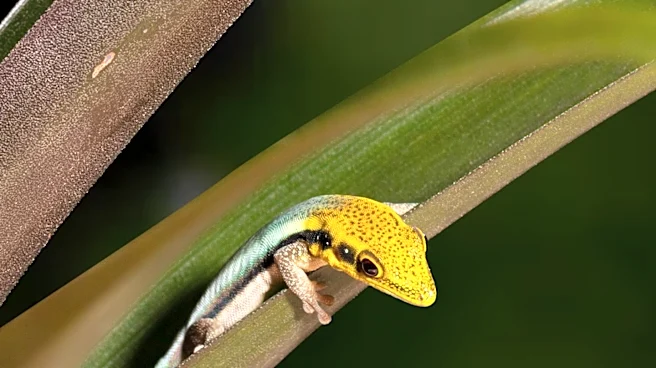
Researchers have discovered that a genetic mutation in the 'lemon frost' variety of leopard gecko, which causes its distinctive coloring, is also linked to aggressive tumor development. This finding suggests that the gecko could serve as a valuable model
for cancer research, complementing existing models. The study, led by Dr. Ylenia Chiari at the University of Nottingham, found that the tumors in these geckos arise naturally, making them particularly useful for studying cancer progression. The research identified recurring DNA alterations in tumor tissues, many of which are also associated with human cancers. This discovery highlights the potential of using genomic analysis tools, originally developed for human cancers, to study cancer in other species.
Why It's Important?
The study's findings could significantly impact cancer research by providing a new model to study tumor development and progression. The natural occurrence of tumors in lemon frost geckos offers a unique opportunity to explore cancer mechanisms without experimental induction. This could lead to new insights into why some species are more susceptible to cancer while others are resistant. Understanding these mechanisms may inspire novel approaches to cancer prevention, detection, and treatment in humans. The research underscores the importance of cross-species studies in uncovering fundamental biological processes that could inform human health advancements.
What's Next?
Future research will involve closer collaboration with cancer biologists to explore the genetic alterations identified in the geckos and their relevance to human cancers. This collaboration aims to uncover the molecular mechanisms driving tumor development in geckos and evaluate their applicability to human oncology. The study's authors anticipate that the lemon frost gecko will complement traditional laboratory models, potentially revealing novel cancer mechanisms not captured by existing systems. This could lead to the development of new therapeutic strategies and enhance our understanding of cancer biology.