







What's Happening?
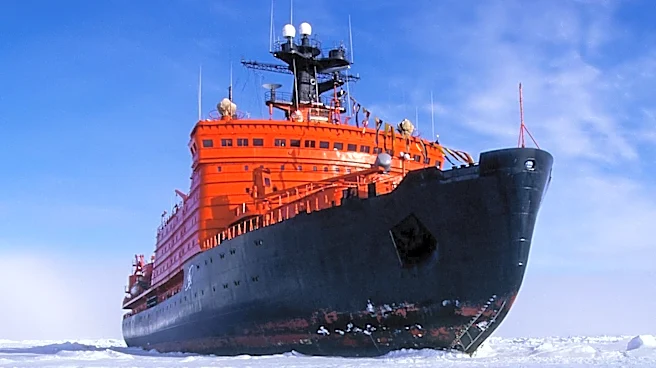
Russian Foreign Minister Sergey Lavrov has announced a 'new phase' in the development of Russia's Arctic region, following the arrival of a Chinese container ship at the port of Murmansk via the Northern Sea Route. This event, which occurred on August
19, marks the first time a Chinese container ship has utilized this route to reach Murmansk. Lavrov highlighted that this collaboration with international partners signifies a new era for Arctic shipping and the development of Russia's Arctic region, which contributes at least 10 percent of the country's GDP and is home to over 2.5 million citizens. Discussions are ongoing with Beijing to increase the frequency of container shipments through Russia's northern waters. Russia is also engaging with New Delhi on Arctic issues, with Indian companies involved in developing the resource potential of the region. Moscow sees prospects for cooperation with other BRICS members, as well as Belarus and other CIS partners, and notes continued interest from South Korea and Singapore despite Western sanctions.
Why It's Important?
The declaration of a 'new phase' in Russia's Arctic development, underscored by increased shipping activity with China via the Northern Sea Route, holds significant geopolitical and economic implications. This development signals a strategic pivot by Russia to strengthen its economic ties with Asian partners, particularly China and India, amidst Western sanctions. The Northern Sea Route offers a shorter maritime passage between Europe and Asia, potentially reducing shipping times and costs, which could reshape global trade routes. For the U.S., this increased activity in the Arctic, coupled with Russia's concerns about NATO's militarization of the region, could heighten geopolitical tensions. The U.S. has a vested interest in maintaining freedom of navigation and stability in the Arctic, and increased Russian and Chinese presence could challenge existing international norms and influence. The economic benefits for Russia, derived from its Arctic region's resource potential and new shipping lanes, could also bolster its global standing and influence.
What's Next?
Following this announcement, Russia is expected to continue its efforts to expand economic and shipping cooperation in the Arctic, particularly with China and India. Regular discussions with Beijing are anticipated to increase the frequency of container shipments through the Northern Sea Route. Russia will likely pursue further engagement with other BRICS members, Belarus, and CIS partners to develop the region's resource potential. The U.S. and its allies will likely monitor these developments closely, potentially increasing their own strategic presence or diplomatic efforts in the Arctic to counter perceived challenges to regional stability and international law. The ongoing militarization concerns raised by Russia regarding NATO's activities in the Arctic suggest a potential for continued geopolitical friction and a need for careful diplomatic navigation to prevent escalation. The long-term viability and economic impact of the Northern Sea Route as a major international shipping lane will also be a key area to watch.
Beyond the Headlines
The 'new phase' in Russia's Arctic development extends beyond immediate economic and shipping benefits, touching upon deeper geopolitical and environmental considerations. The increased use of the Northern Sea Route highlights the accelerating impact of climate change, as melting ice makes the route more accessible. This accessibility, while offering economic advantages, also raises environmental concerns regarding increased shipping traffic in a fragile ecosystem. From a geopolitical standpoint, Russia's emphasis on cooperation with non-Western nations in the Arctic could signal a broader shift in global alliances and influence, potentially challenging the U.S.-led international order. The U.S. will need to consider how to balance its strategic interests in the Arctic with environmental protection and international cooperation, especially as the region becomes a more contested and economically vital area. The long-term implications could include a re-evaluation of international maritime law and governance in the Arctic, as well as increased competition for resources and strategic positioning.