


What's Happening?
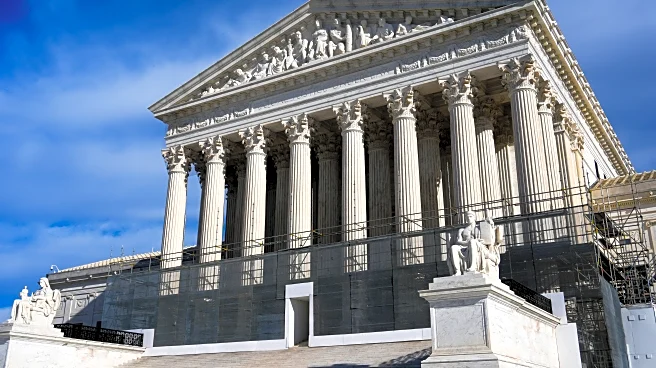
The U.S. Supreme Court has ruled that many of the tariffs imposed by President Trump, specifically those categorized as 'reciprocal' nation-level duties, are illegal. This decision, however, does not extend to tariffs on automobiles and metals, which
will continue to be enforced. The ruling marks a significant legal development in the ongoing debate over trade policies initiated during President Trump's administration. These tariffs were part of a broader strategy to address trade imbalances and protect domestic industries, but they have faced criticism and legal challenges from various sectors. The court's decision reflects a judicial check on the executive branch's trade policy powers, particularly concerning the legality and scope of tariffs that can be imposed unilaterally.
Why It's Important?
The Supreme Court's decision to strike down many of President Trump's tariffs could have substantial implications for U.S. trade policy and international relations. By invalidating these tariffs, the court has potentially opened the door for increased imports from affected countries, which could lead to lower prices for certain goods in the U.S. market. However, the continuation of auto and metals tariffs means that these industries will still face higher costs, which could be passed on to consumers in the form of higher prices for vehicles and products containing metals. This ruling may also influence future administrations' approaches to trade policy, emphasizing the need for careful legal consideration when imposing tariffs. Industries that were adversely affected by the tariffs may see this as an opportunity to renegotiate terms and seek more favorable trade conditions.
What's Next?
Following the Supreme Court's ruling, there may be a series of responses from both domestic and international stakeholders. U.S. industries that benefited from the tariffs might lobby for new protective measures, while those negatively impacted may push for further reductions or eliminations of remaining tariffs. Internationally, countries affected by the now-invalidated tariffs might seek to renegotiate trade agreements with the U.S. to restore or enhance market access. Additionally, the ruling could prompt legislative action to clarify the scope of executive power in trade matters, potentially leading to new laws or amendments governing tariff imposition. The decision may also influence ongoing and future trade negotiations, as it underscores the importance of aligning trade policies with legal standards.