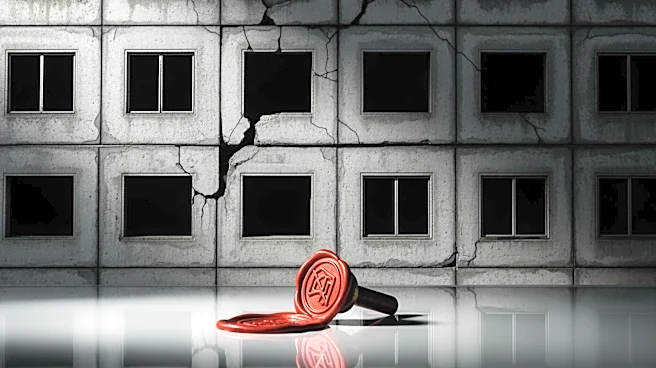








What's Happening?
China's real estate market has been in decline since 2021, following the implementation of the 'three red lines' policy in 2020, which restricted the amount of debt real estate developers could take on. This policy aimed to reduce speculation in the over-leveraged
property market but led to a financial crisis among developers, resulting in a significant downturn in property sales and construction. The Chinese government has since repealed the policy in January 2026 and is working to increase the availability of affordable housing to stabilize the market. The collapse has had severe consequences, including a loss of over $100 billion by major industry players and a significant increase in homelessness.
Why It's Important?
The collapse of China's real estate market has far-reaching implications for the global economy, given China's significant role in international trade and finance. The crisis has led to a loss of confidence among investors and could impact global markets, particularly those heavily reliant on Chinese economic stability. The Chinese government's efforts to stabilize the market by repealing restrictive policies and increasing affordable housing availability are crucial to preventing further economic downturns. The situation also highlights the risks associated with over-leveraging in real estate markets, a lesson that could be relevant to other countries with similar economic structures.
What's Next?
The Chinese government is likely to continue its efforts to stabilize the real estate market by promoting affordable housing and possibly introducing new regulations to prevent future crises. The international community will be closely monitoring these developments, as the stability of China's economy is critical to global economic health. Additionally, the situation may prompt other countries to reassess their real estate policies to avoid similar crises.